




Make Your Own Chains Part 1
Even easy chains can make your pieces look more special and eye-catching!
Jump to a Section:
Getting Started with Chain Maille Jewelry
I became interested in chain maille years ago when the teenage boys next door tore apart a lawn mower motor to create a motorized tool for coiling wire and cutting jump rings. They were making a full chain maille shirt. When they finished, it was incredible and almost too heavy to wear. I still wonder how knights during the Middle Ages managed to wear chain maille that weighed anywhere from 25 to 60 pounds, and later, full metal armor.
Adding a new skill to your jewelry-making repertoire is always worth your time, even if you never plan to make protective clothing. Chain maille is especially valuable because handmade chains that complement a design can really kick the WOW factor up a notch. Even the simplest chain maille designs add visual impact and increase the perceived value of your work.
How to Learn Chain Maille Jewelry Making
People generally fall into three learning categories.
A) Visual
B) Auditory
C) Kinesthetic
In other words, we learn by seeing something done, hearing or reading how to do it, or by hands-on experience. Most of us learn in all three ways but tend to excel in one. How you learn best when acquiring a new skill determines whether you gravitate toward videos, books or tutorials, or classes.
My suggestion is to do all three. There are always tips and tricks to pick up with each method.
A: Learning Through Video
There are endless jewelry and chain-making videos online, which are great for visual and auditory learners. Some are better than others, but each may contain a tip or trick not found elsewhere. Those small nuggets alone can be worth the time invested.
When watching videos, I recommend keeping a notepad and pencil handy and being ready to pause the video to jot down important information, such as what tools and materials were used. Be aware that each jewelry artist may use different jump ring sizes and wire gauges to make the same design, especially if they make and cut their own rings. Tools may also be modified or even handmade.
B: Learning Through Books
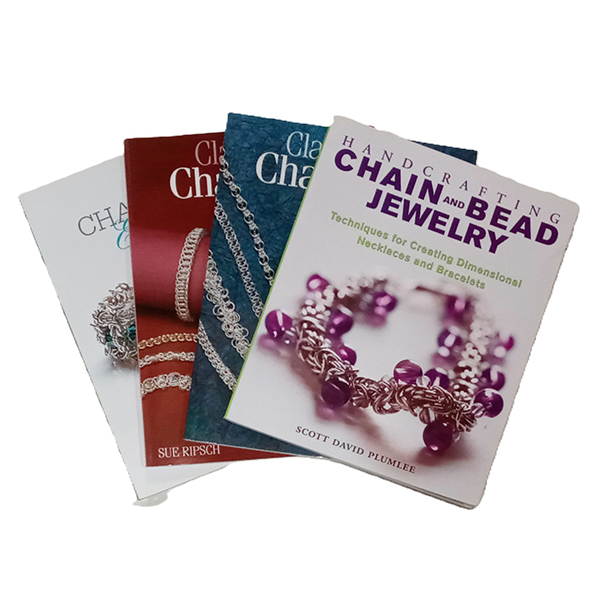
Books are wonderful for visual learners, especially those filled with step-by-step photos. The best books are the ones you can return to again and again as reference material. It is much faster to flip through a book to find a specific detail than to rewatch an entire series of videos hoping to locate the information you need.
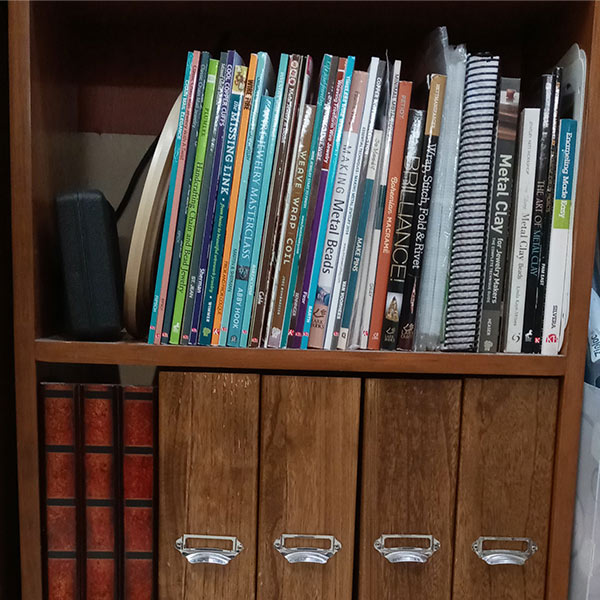
Most books that come home with me end up on my bookshelf as long-term references. When I am planning a new project, I often use books to refresh a skill I have not used in a while or as a jumping-off point for learning something new. The first section of many good chain-making books covers tools, supplies, and foundational information to get you started.
Tip:Have several books in your library by different artists for each jewelry-making area you are interested in. Since artists use different tools and materials, you may find the answer to a question in one book when it is missing from another.
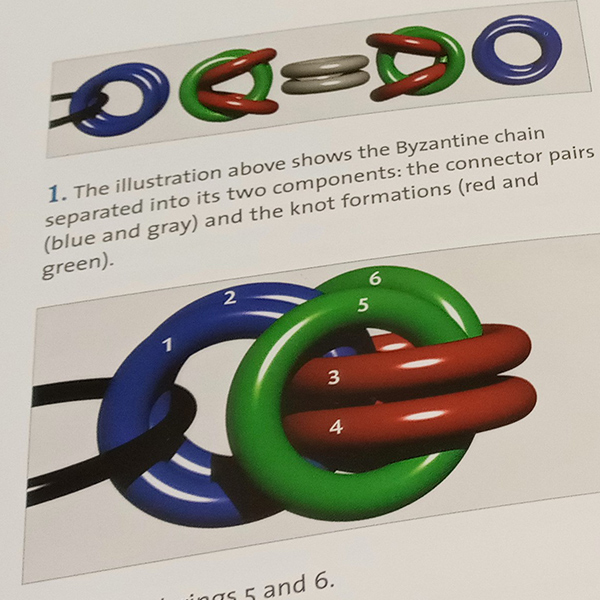
Tip:Chain-making books usually start with the easiest designs and work up to more complex ones. Look for tutorials with lots of step-by-step photos. It is extremely helpful when jump rings are color-coded or numbered in the photos. If they are not, make a photocopy and color the steps yourself with colored pencils.
Some books or tutorials explain the mathematical equations used to determine jump ring size and gauge, which is important if chain maille is your primary focus. For many of us, though, we simply want to know what size jump rings to use to replicate the project shown, with no math involved. Fortunately, those sizes are included in printed directions about 99.9 percent of the time.
Even if you do not plan to dive deeply into chain maille, I recommend printing Aspect Ratio Guides by Kylie Jones as reference material. These articles clearly show how wire gauge and ring size affect a chain and make the math easy to understand.
Designing Chain Maille with Aspect Ratio
Full Persian Weave
Half Persian Weave
Byzantine Weave
European 6-in-1 Weave
Tip:Make printed copies of the chains you replicate most often. Mine are spiral-bound so they are easy to flip through. I keep adding new pages until so many fall out that the book needs to be re-bound.
C: Learning Through Classes
Taking an in-person or live online class allows you to ask questions, making these classes valuable for all types of learners. A good teacher knows how to engage visual, auditory, and kinesthetic students.
If you already have a basic understanding of a skill from reading or watching videos, you will progress much more quickly in class. One of the best parts of most classes is that you usually receive reference materials or tutorials that you can use later to refresh your memory.
Working alongside other students with different learning styles also shows how many ways there are to accomplish the same goal. It is helpful to see how others use different tools, or use the same tools in different ways.
Making Chain Maille Jewelry
To start making basic chains, you only need jump rings, directions, and two pliers. Flat nose, chain nose, or bent nose pliers all work well. When working with large rings, two non-marring soft-jaw flat nose pliers may be helpful.
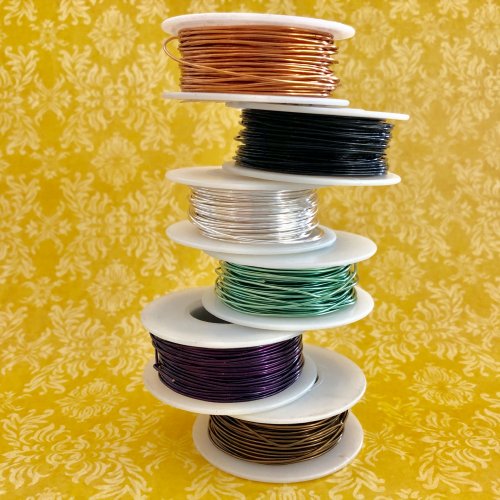
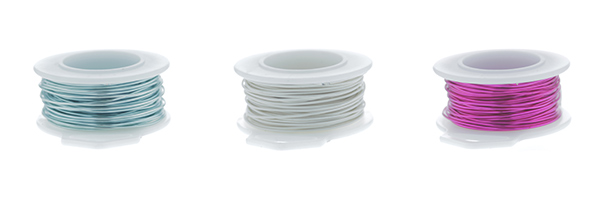
If you want to dip your toes into chain making without spending a lot, start with inexpensive base-metal rings. I love seeing designs come together using colored aluminum jump rings or colored silver-plated copper craft wire.
We all have different likes and dislikes, even in jewelry making. Do not feel bad if, after trying several complicated chains, you discover that you prefer making other things. There are many reasons someone might step away from chain maille.
When first making chain, we often grip rings tighter than necessary, which can mar the wire and cause hand, wrist, or arm pain. Early chains may not be perfect. Like anything else, practice makes perfect.
For your first chain projects, it can be helpful to purchase jump rings rather than cutting them yourself. Flush cutters often create uneven cuts, which I discuss later in the Double Cable Chain section.
Always start with an easy chain and work up to more difficult designs. Advanced skills are built on basic skills, and nothing replaces muscle memory developed through repetition.
Where to Start with Chain Maille Jewelry
Jump rings are the basic building blocks of chain jewelry.
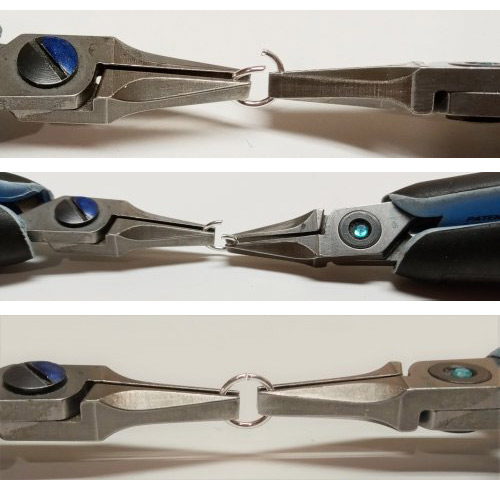
Learning to open and close them properly is the first and most important skill to master.
Because most chain maille designs do not require soldered rings, this skill is absolutely critical.
Step-by-step instructions for opening and closing jump rings can be found in Wire Basics: Opening and Closing Jump Rings.
Another excellent resource is Strategies for Starting a Chain Mail Weave by Marilyn Gardiner.
It covers all the little things you wish you knew before starting your first chain maille project.
Single Cable Chain in Chain Maille Jewelry
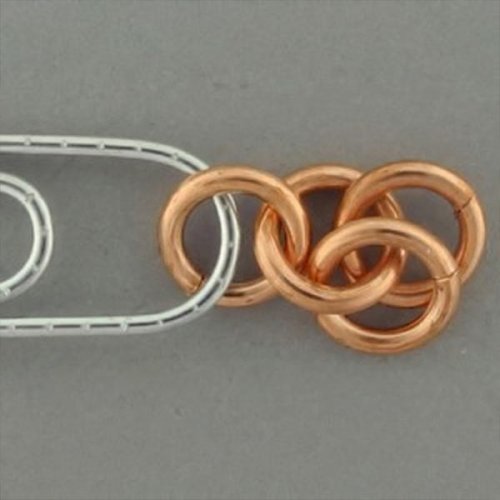
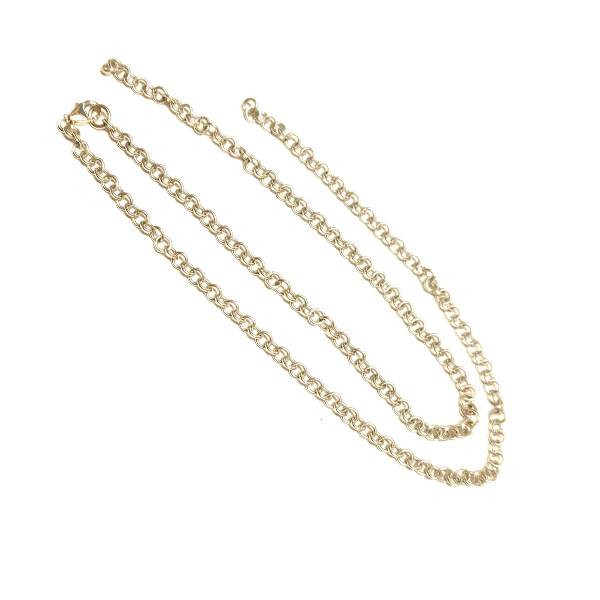
Once you are comfortable opening and closing jump rings, the first chain most people make is a Single Cable Chain. This chain is created by connecting one jump ring to the next in a long line.
No matter the size or gauge of the rings, a single cable chain made with unsoldered rings is the weakest chain. When the seam of one ring lines up with the seam of the next, the chain can pull apart with very little force.
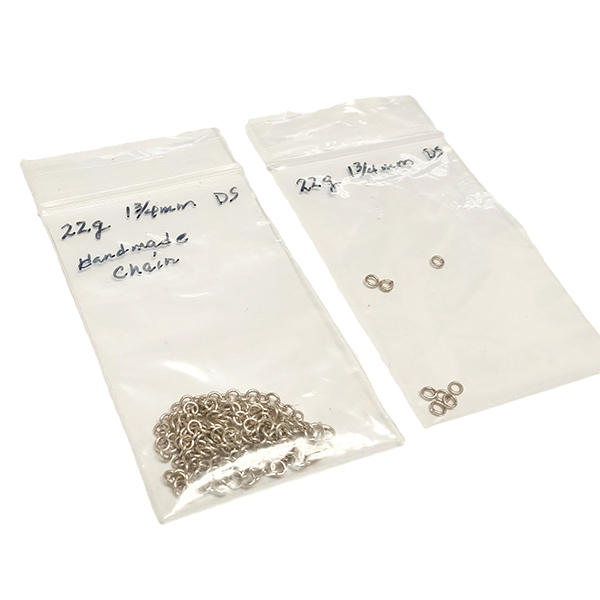
After spending hours tumbling a delicate chain I had made from dead-soft jump rings, I tested it with a slight tug. The chain failed. Those rings are now being used as faux eyelets on sheet-metal earrings.
Tips
- Tumbling a finished chain in steel shot does not change the temper of jump rings. Only the outer surface hardens. Dead-soft rings remain mostly dead soft.
- After that experience, I chose to buy a fine-gauge finished chain with soldered rings instead of making it myself.
Additional Notes
Two single cable chains attached side by side to a clasp are stronger than one alone.
The Jump Ring Fringe Bracelet is a great example. It is simply a single cable chain with many rings attached to create a fringe effect.
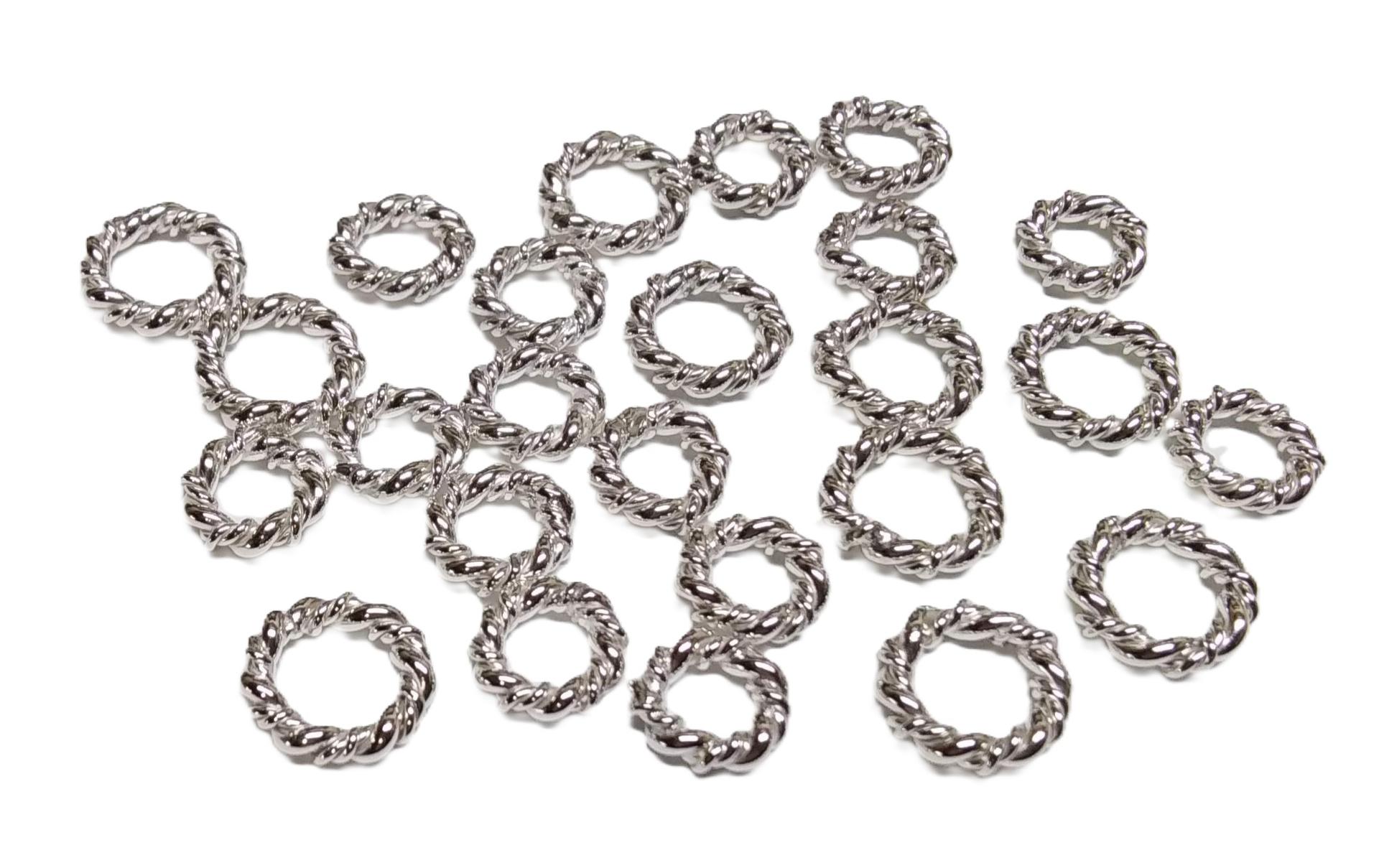
For added interest, you can swap some of the rings for twisted square wire rings.
Important Note: Many tutorials reference either the interior diameter, also called ID, or outer diameter, also called OD, of jump rings. Most chain maille books list rings by ID. Always confirm which measurement is being used before ordering or making rings.
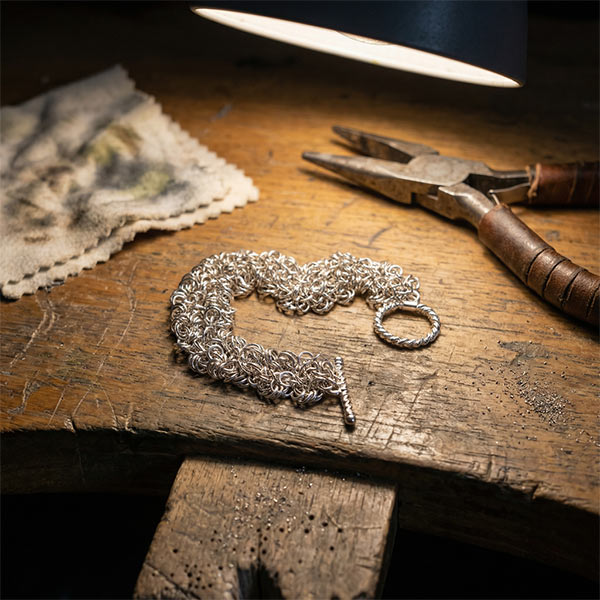
If you're making jump rings, check out the short article Wire Temper and Jump Rings.
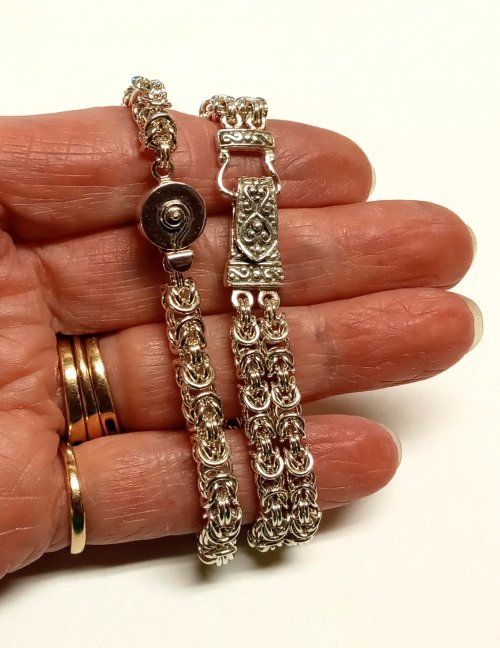
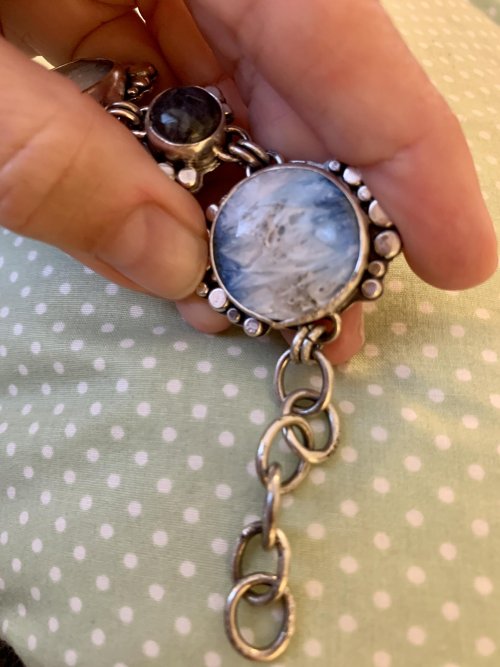
Make larger rings with heavier gauge wire to lessen the chance of the rings pulling open, as the Bezelled Gemstone Bracelet shown here.
Find the notes for making this bracelet with heavy gauge rings here.
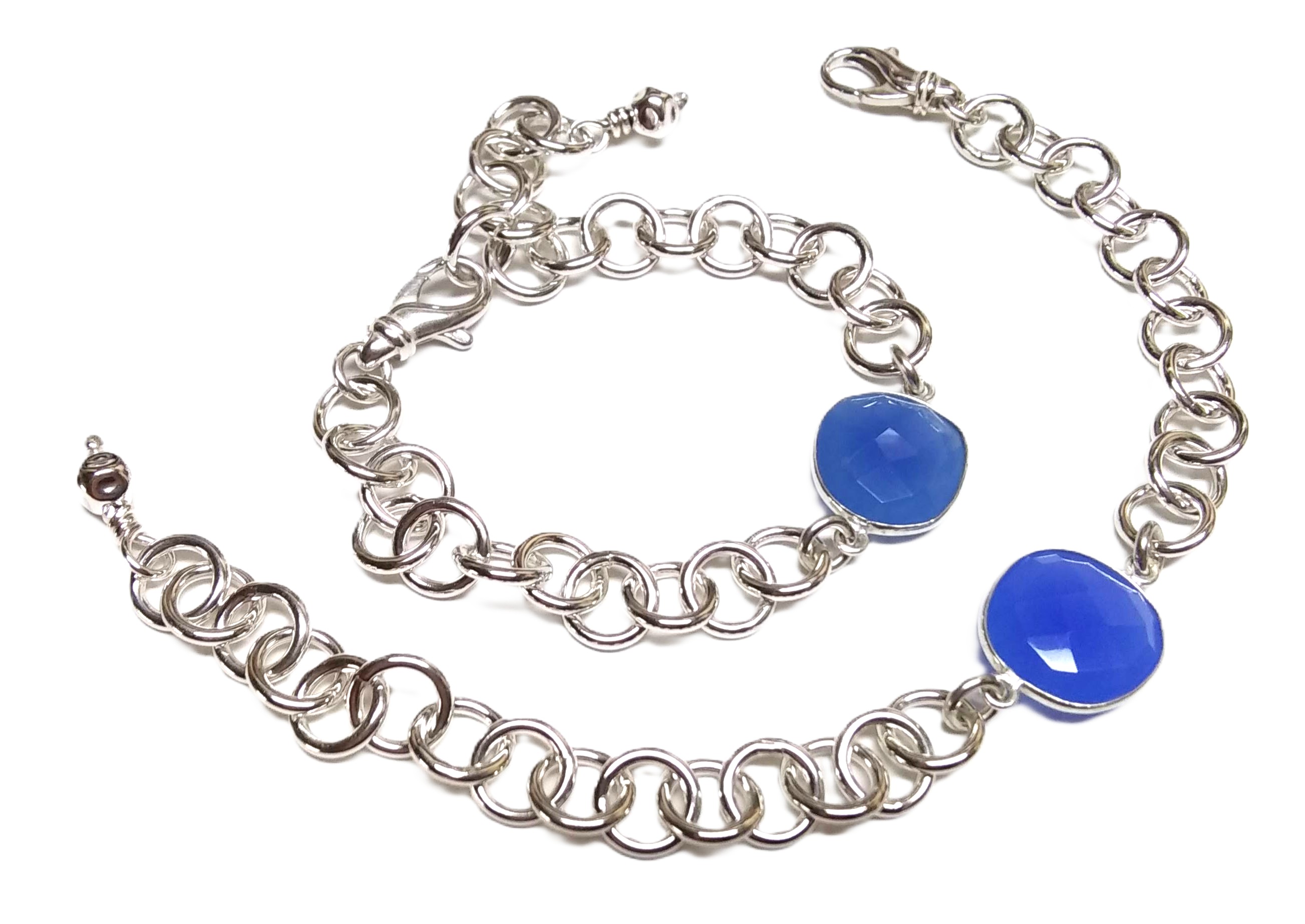
Adding a focal bead, such as this Bezelled Blue Onyx faceted gemstone, adds a designer touch to a simple chain.

Do not assume all rings should be soldered closed. In one instance, a bracelet with open rings failed during an accident and likely prevented serious injury.
Read more about that story here
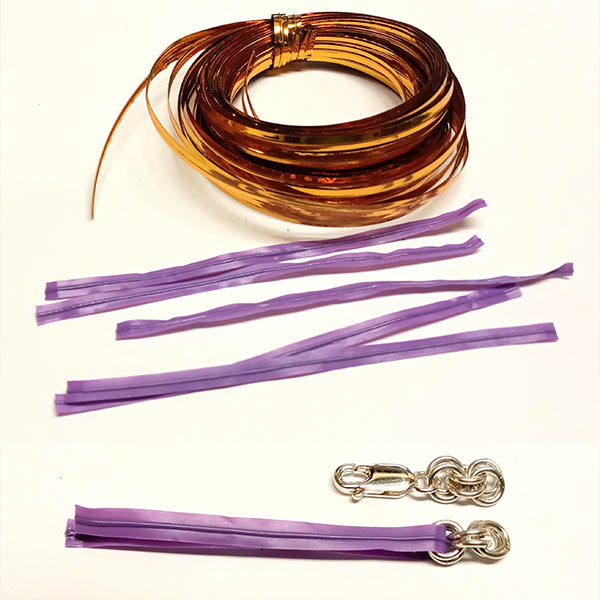
Save twist-tie wraps from wire coils. They are extremely useful when starting chains, giving your fingers something larger to grip.
When clasps arrive, I usually solder their attached rings closed immediately. The rings are often small and easily pulled open, and it saves time later.
Double Cable Chain in Chain Maille Jewelry
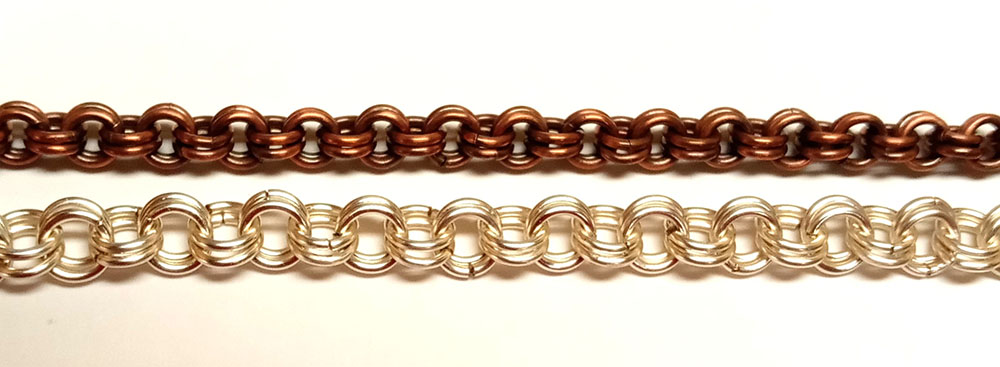
A Double Cable Chain is constructed by connecting two rings to two rings, continuing down the length of the chain. This design is significantly stronger than a single cable chain.
Hand-cut rings often do not close properly because flush cutters do not create perfectly flat cuts. These gaps weaken the chain, look unprofessional, snag clothing, and can scratch the wearer. Machine-cut rings close cleanly and produce a stronger, more polished result.
A plain double cable chain can be enhanced by adding beads or larger, heavier-gauge rings between shorter chain sections.
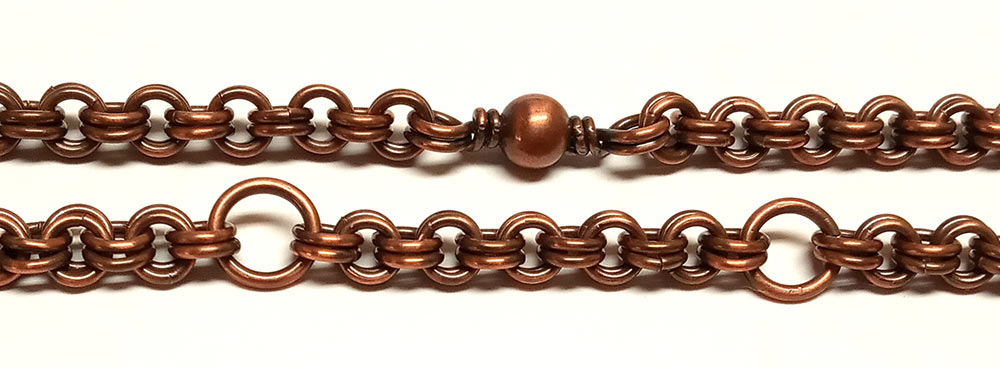
Examples Include:
Find the tutorial for the simply elegant Garnet 2-in-2 Chain Maille Necklace by Kylie Jones here.

A double cable chain anchors the beautiful Romanov Chainmaille Pendant by Natalie Patten, found here.

This Rubber Meets Metal bracelet by Nancy Chase is a fun take on the double cable.
Check the hardware store for rubber or silicone "O" rings.
These exact "O" rings may not be found, but adjusting the size of the connecting aluminum jump rings to accommodate the size of available rings is easy.

Triple Cable Chain in Chain Maille Jewelry
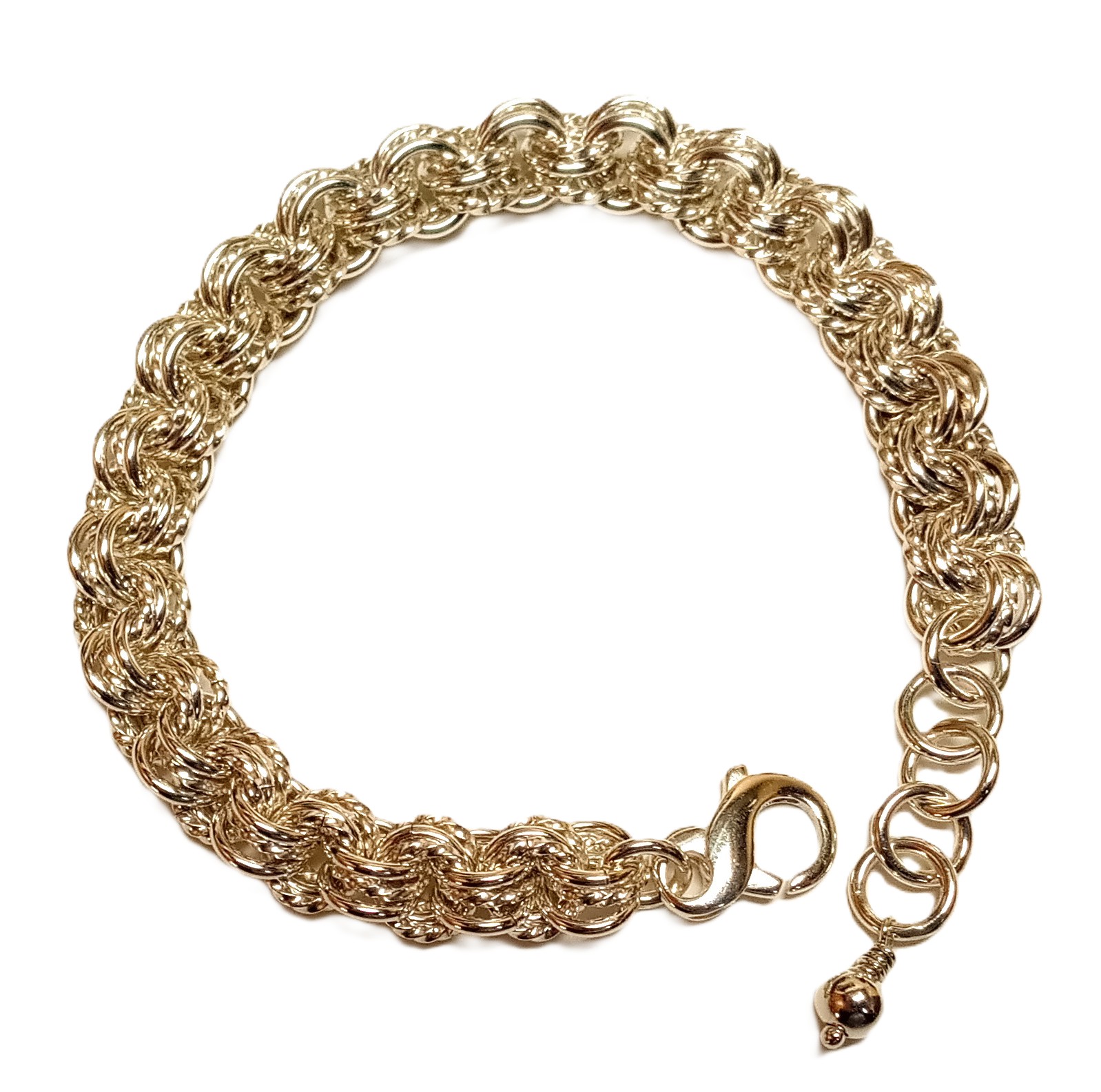
Using a combination of round wire and twisted square wire jump rings adds sparkle and texture to a simple triple cable chain. This creates a heavier chain that works especially well for men's jewelry.
Find the tutorial as well as tips for twisted square wire rings for this simple chain, which is a heavier chain great for a guy, in Accidentally Learning Something New here.
For more of a challenge than just twisting square wire, check out Twisted Wire Jump Rings here.
Rolo Chain in Chain Maille Jewelry
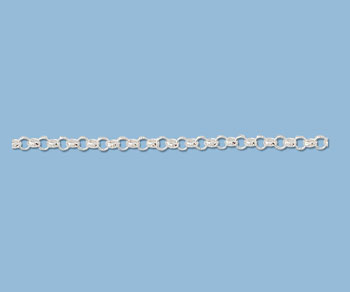
Rolo chain, also known as Belcher chain, is a single cable chain made with half-round or oval wire formed into round or oval rings. These rings can be expensive to purchase, especially when you realize how many are required to complete a chain.
Since half-round wire is available in many affordable materials, including plated, enameled, and base metals, making your own rings is an excellent way to practice and save money.

What's Next?
As you can see from these examples, a simple cable chain can easily become the star of a design. By changing the size, color, gauge, or texture of jump rings, you can create endless variations and truly make a design your own.
Be sure to check out parts two and three below!
Making Your Own Chains - Part Two
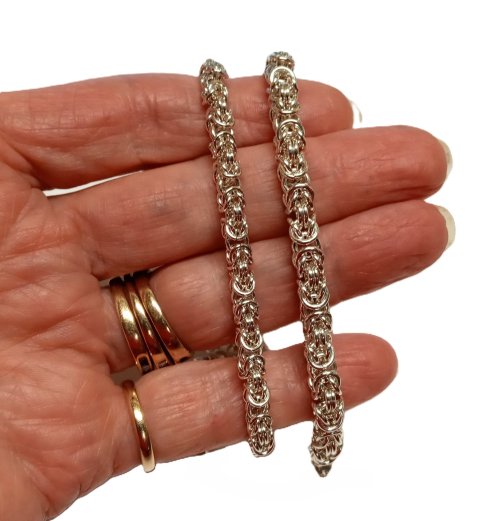
In Part Two, we move beyond basic cable chains and begin exploring more complex and visually striking chain maille structures.
You'll be introduced to chains like the Byzantine, learn why jump ring accuracy becomes increasingly important, and see how wire gauge and ring size dramatically affect the strength, weight, and appearance of a finished chain.
This installment focuses on building confidence with denser weaves, understanding construction patterns, and making thoughtful design choices that elevate chain maille from simple to sophisticated.
Making Your Own Chains - Part Three

In Part Three, the focus shifts to chains that require closed links for added strength, durability, and long-term wear.
This installment explores when and why soldering or fusing jump rings becomes important, along with practical considerations for choosing the right method based on materials, chain style, and intended use.
You'll also see how shaping, texturing, and finishing techniques can transform simple links into refined, heirloom-quality chains, while learning when open rings still make sense and when closed rings are the better design choice.
Materials

Tools

- DUR-1312
- Lesson Quantity: 1.00 pieces
- Purchase Quantity: 1.00 each
- Price: $388.00
- Gold Club Price: $291.00

- G25-1-KITSS
- Lesson Quantity: 1.00 pieces
- Purchase Quantity: 1.00 each
- Price: $182.60
- Gold Club Price: $136.95

- G15-20
- Lesson Quantity: 1.00 pieces
- Purchase Quantity: 1.00 each
- Price: $170.72
- Gold Club Price: $128.04

- G2-506
- Lesson Quantity: 1.00 pieces
- Purchase Quantity: 1.00 each
- Price: $32.95
- Gold Club Price: $24.71

- MAT-620.00
- Lesson Quantity: 1.00 pieces
- Purchase Quantity: 1.00 each
- Price: $14.95
- Gold Club Price: $11.21
Supply Detail
Purchase quantity:
Price: $
Gold Club Price: $
- Category: Teaching
- Technique(s): Chain Making, Teaching, General Education, Chain Maille

Judy Larson
Other Articles by Judy Larson
 What is Druzy
 Coiled Wire Jewelry Series Part 1 - Everything New is Old
 Where do you create
 Soldering on Copper
 Charting Your Creations
 Design Process with 3 Earrings
 All About Rolling Mills
 How to Use Disc Cutters to Make Metal Washers
 Disc Cutter Basics and How to Make Metal Washers
 I Am Not a Hoarder
 The Beauty of Druzy
 Design Process with 3 Different Earrings
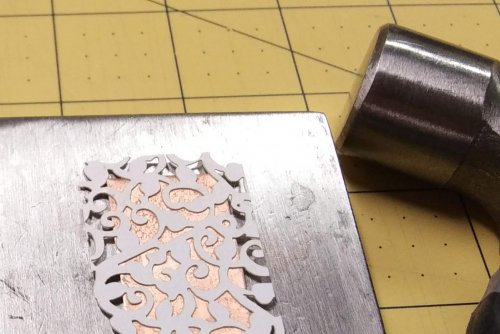 Think Outside the Box - Alternative Metal Texturing
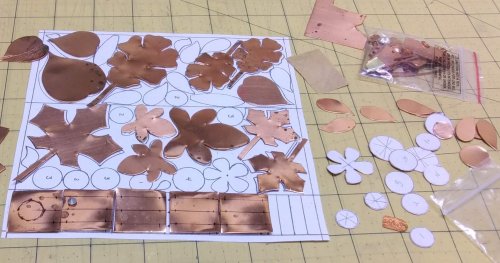 Fall Leaves for Your Designs
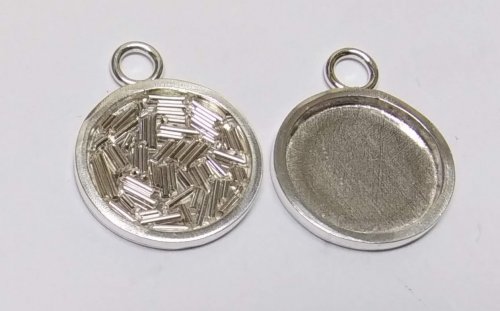 Cholula "Folk Art" Charms
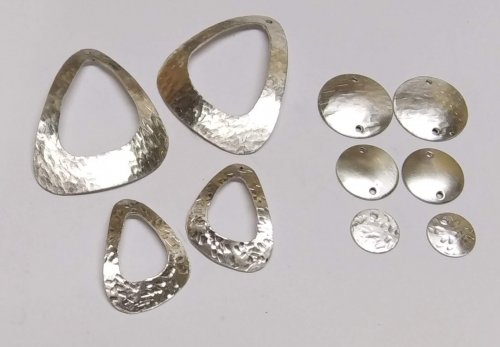 Lemons to Lemonade
 Why You Should Take a Class
 Bead, Shell, and Rock Cabochons
 What Tools Do I Need for Wirework and Bead Stringing - Start With The Basics
 Choosing Pliers
 Saving, Storing, Using Tutorials
 Flop to Flip
 The Story of Turquoise
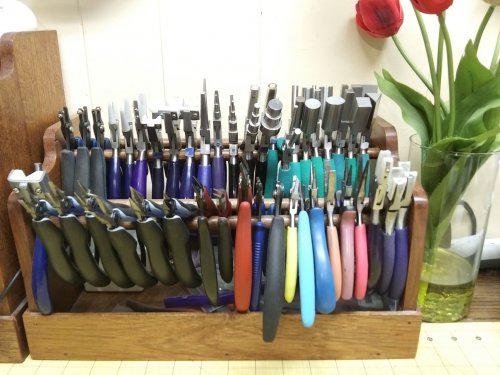 Non Marring Tools
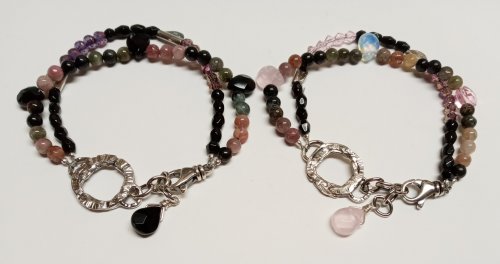 Using Lower Quality Beads
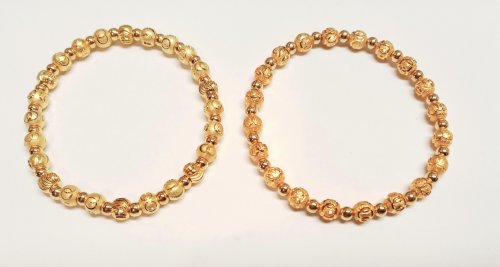 Differences in Gold Plating
 Inventorying Your Supplies
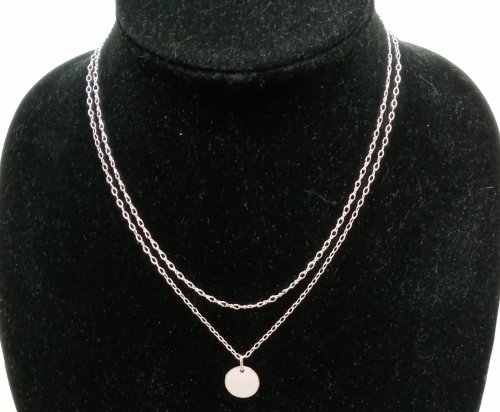 Engineering the Multi-chain Necklace
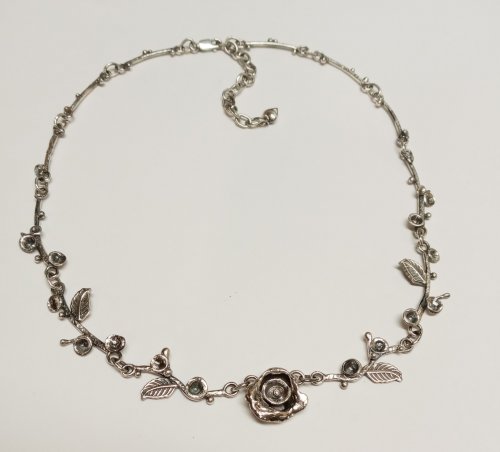 Benefits of Extender Chains
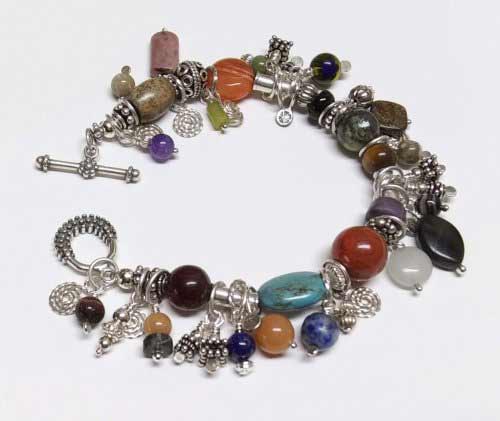 My Most Often Used Embellishments
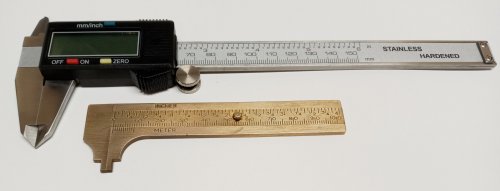 Sliding Gauges and Calipers
 Wire and Sheet Gauge Measuring Tool
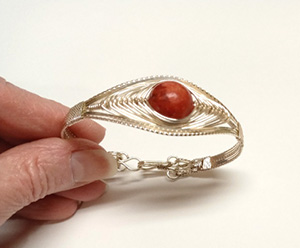 Silver Plated Copper Craft Wire
 Jewelry from Other Cultures
 Conversation Starters
 Well, That Didn't Work, Now What
 Water Casting for the Weekend Jeweler
 A Few Thoughts on Multi-Strand Beading Wires
 How to Downsize Your Earring Projects Without Losing Style
 Celebration Jewelry
 Moonstone- A Flash of Light
 Make Your Own Chains Part 2
 Make Your Own Chains Part 3

The premier place for all your jewelry making needs. The best in wire, tools, cabochons, gemstone beads and more. As well as a superior resource for educational support to help build your jewelry making skills and techniques.
Connect With Us

® 2007 - 2026 Wirejewelry.com Powered by ClaimTheWeb Cart