




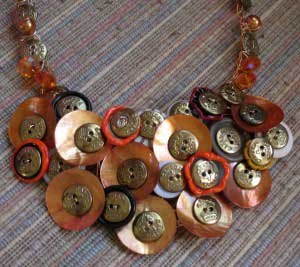
See Yourself as a Creative Thinker-Part II
See yourself as creative and you will likely recognize the importance of brainstorming. This builds a strong foundation for creative thinking.

See yourself as creative, and you'll likely recognize the importance of brainstorming. This builds a strong foundation for creative thinking. We all use limited brainstorming from time to time in life and in jewelry making. It's simply generating multiple ideas in hopes of finding something usable.
For example, while preparing to string the final strand of a multi-strand bracelet, I ran out of the medium beading wire I rely on. The beads were medium-sized but relatively heavy. I brainstormed several solutions: run to the store, borrow from a friend, make a two-strand bracelet instead of three, double the lighter wire, make the bracelet another time, use Fireline with a needle, or switch to memory wire. I ultimately chose complementary small beads strung on a single strand of lighter wire for the middle strand. Brainstorming helped me solve the problem.
In art and jewelry making, there's a difference between brainstorming to solve a simple problem, as with the bracelet, and brainstorming to develop an original idea. The following rules of brainstorming are important for both, but especially when seeking novelty:
**Rules of Brainstorming**
* Lots of Ideas Wanted
* No Criticism Allowed (Think Positively)
* Hitchhiking is OK
* Wild Ideas are Welcome
When brainstorming, aim to generate many ideas. The first ideas that come to mind are usually the most common. To reach originality, you must keep thinking past the initial wave. Often, the most novel ideas emerge after a lull.
Rule #2 don't criticize your ideas is often the hardest. Capture every idea, even if it seems absurd. Judgment can be especially challenging in group brainstorming, though less so in jewelry design.
Hitchhiking (rule #3) involves adapting someone else's idea. In the bracelet example, I adapted the double-strand idea to a single strand with lightweight beads. Have you ever modified an idea you saw on Pinterest or Etsy to create your own work?
Rule #4 encourages wild ideas. Thinking outside the comfort zone can lead to novel, appropriate pieces. Generating wild ideas also releases inhibitions that may limit creativity. Even if you never use a wild idea, entertaining it boosts creative thinking. Brainstorming with humor can enhance the process once the first wild idea is shared, many more often follow.
As an example, I brainstormed new ways to create headpins. Instead of using store-bought or torch-made balled headpins, I explored making a headpin from one piece of wire without a torch. I started by doodling and drawing my ideas. Below are my first thoughts.
For example, while preparing to string the final strand of a multi-strand bracelet, I ran out of the medium beading wire I rely on. The beads were medium-sized but relatively heavy. I brainstormed several solutions: run to the store, borrow from a friend, make a two-strand bracelet instead of three, double the lighter wire, make the bracelet another time, use Fireline with a needle, or switch to memory wire. I ultimately chose complementary small beads strung on a single strand of lighter wire for the middle strand. Brainstorming helped me solve the problem.
In art and jewelry making, there's a difference between brainstorming to solve a simple problem, as with the bracelet, and brainstorming to develop an original idea. The following rules of brainstorming are important for both, but especially when seeking novelty:
**Rules of Brainstorming**
* Lots of Ideas Wanted
* No Criticism Allowed (Think Positively)
* Hitchhiking is OK
* Wild Ideas are Welcome
When brainstorming, aim to generate many ideas. The first ideas that come to mind are usually the most common. To reach originality, you must keep thinking past the initial wave. Often, the most novel ideas emerge after a lull.
Rule #2 don't criticize your ideas is often the hardest. Capture every idea, even if it seems absurd. Judgment can be especially challenging in group brainstorming, though less so in jewelry design.
Hitchhiking (rule #3) involves adapting someone else's idea. In the bracelet example, I adapted the double-strand idea to a single strand with lightweight beads. Have you ever modified an idea you saw on Pinterest or Etsy to create your own work?
Rule #4 encourages wild ideas. Thinking outside the comfort zone can lead to novel, appropriate pieces. Generating wild ideas also releases inhibitions that may limit creativity. Even if you never use a wild idea, entertaining it boosts creative thinking. Brainstorming with humor can enhance the process once the first wild idea is shared, many more often follow.
As an example, I brainstormed new ways to create headpins. Instead of using store-bought or torch-made balled headpins, I explored making a headpin from one piece of wire without a torch. I started by doodling and drawing my ideas. Below are my first thoughts.

You can see that I didn't generate very many ideas, even though rule #1 encourages listing a quantity of possibilities.
I also could have easily broken rule #2 by criticizing the last two ideas before I drew them.
They didn't seem likely to work, but I wrote them down anyway. You never know what might emerge from an idea during brainstorming.
After a lull, I remembered I could hitchhike on some of my ideas. I kept experimenting, adding more possibilities.
Not all ideas resulted from hitchhiking, but using this approach helped me generate new options and continue the creative process.
I also could have easily broken rule #2 by criticizing the last two ideas before I drew them.
They didn't seem likely to work, but I wrote them down anyway. You never know what might emerge from an idea during brainstorming.
After a lull, I remembered I could hitchhike on some of my ideas. I kept experimenting, adding more possibilities.
Not all ideas resulted from hitchhiking, but using this approach helped me generate new options and continue the creative process.

Finally, I spent a few more minutes considering what might be a wild and crazy idea for making a headpin.
I tended to think of outlandish things I could add to the head pin, but stuck with the original parameter of just using one wire.
I tended to think of outlandish things I could add to the head pin, but stuck with the original parameter of just using one wire.

I've explained these rules of brainstorming in separate paragraphs with examples, but don't think of them as steps.
When brainstorming, try to keep all the rules in mind at once. A "wild and crazy" idea can come at any time, even early on, just as an idea built on "hitchhiking" can.
Sometimes, I find my wire brainstorming is more productive if I manipulate actual pieces of wire rather than just drawing.
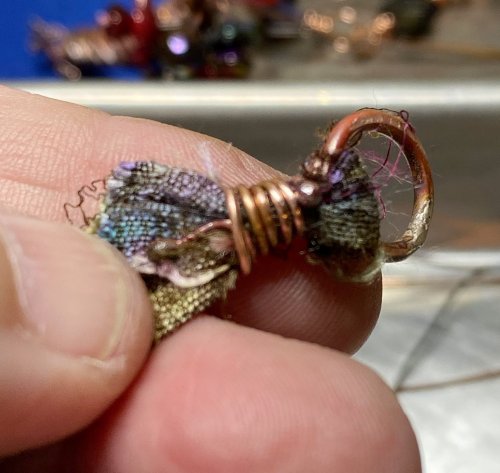
The photo below shows some headpin ideas I generated this way. If you create something you don't like or think won't work, do not toss it out it could inspire another usable idea.

Not all of my brainstormed ideas produced usable headpins.
A few were novel and appropriate, but many were not. Was this a waste of time? Absolutely not.
Brainstorming gave me several headpin options to use on earrings, dangles, and more.
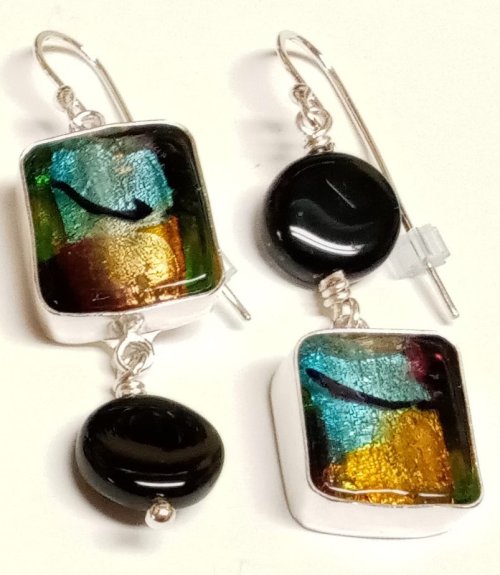
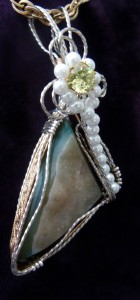
I actually used three new headpin ideas on the necklace shown below.
Without brainstorming, I would still be making the same headpins I've used for years.
I'll keep my drawings and wire examples for possible future use. Brainstorming also stimulated my creativity and helped me "see myself as creative."
And by the way... it was fun.
A few were novel and appropriate, but many were not. Was this a waste of time? Absolutely not.
Brainstorming gave me several headpin options to use on earrings, dangles, and more.
I actually used three new headpin ideas on the necklace shown below.
Without brainstorming, I would still be making the same headpins I've used for years.
I'll keep my drawings and wire examples for possible future use. Brainstorming also stimulated my creativity and helped me "see myself as creative."
And by the way... it was fun.

In Part III of See Yourself as Creative, let’s consider Fluency, Flexibility, Originality and Elaboration in jewelry making. In the meantime, practice brainstorming.
Materials

Wrie

Sheet

Beads

Cabochons
Tools

WireJewelry - Ultimate Wire-Pliers Jewelry Pliers with Case, Set of 5
G15-20
- G15-20
- Lesson Quantity: 1.00 pieces
- Purchase Quantity: 1.00 each
- Price: $170.72
- Gold Club Price: $128.04
Supply Detail
loading...
Change Metal:
This Article requires:
Purchase quantity:
Price: $
Gold Club Price: $
Purchase quantity:
Price: $
Gold Club Price: $
- Category: General Education
- Technique(s): Wrapping

Karen Meador, Ph.D.
Other Articles by Karen Meador, Ph.D.
 See Yourself as a Creative Thinker
 See Yourself as a Creative Thinker-Part III
 See Yourself as a Creative Thinker, Part IV
 Working with Transparent Enamels Pt 1
 Working with Transparent Enamels Part 2 -The Use of Flux with Transparent Enamels on Copper
 Working with Transparent Enamels, Pt. 3
 Working with Transparent Enamels Pt 4

The premier place for all your jewelry making needs. The best in wire, tools, cabochons, gemstone beads and more. As well as a superior resource for educational support to help build your jewelry making skills and techniques.
Connect With Us

® 2007 - 2026 Wirejewelry.com Powered by ClaimTheWeb Cart