




Gem Profile- Opal Introduction
This article is one of a six-part series on Opal. Here is a complete list of our Opal articles: An Opal Introduction, Common Opal, Black Precious Opal, White Precious Opal, Opalized Fossils, Boulder Opal
Opal Facts
Opal is one of the most popular gemstones in the world. It is the traditional birthstone for October and the national gemstone of Australia.
Composed of non-crystalline silica or quartz, opal is an amorphous solid, meaning it does not form structured crystals. It forms in cracks and seams, filling vugs in host rocks to create nodules.
With a Mohs hardness of 5.5 to 6, opal is as stable as glass but can be brittle. Opal contains water up to 30% of its weight so exposure to extreme heat during jewelry-making can cause it to expand, craze, or crack.
Although the market offers many varieties of opal, there are basically four types: common, precious, black, and boulder. Other options are usually variations based on locality.
In this series on opals, I will explore each variety and highlight its unique characteristics.
Opal earrings and pendant wire wrapped by Ronda Sherwood
Opal is one of the most popular gemstones in the world. It is the traditional birthstone for October and the national gemstone of Australia.
Composed of non-crystalline silica or quartz, opal is an amorphous solid, meaning it does not form structured crystals. It forms in cracks and seams, filling vugs in host rocks to create nodules.
With a Mohs hardness of 5.5 to 6, opal is as stable as glass but can be brittle. Opal contains water up to 30% of its weight so exposure to extreme heat during jewelry-making can cause it to expand, craze, or crack.
Although the market offers many varieties of opal, there are basically four types: common, precious, black, and boulder. Other options are usually variations based on locality.
In this series on opals, I will explore each variety and highlight its unique characteristics.
Opal earrings and pendant wire wrapped by Ronda Sherwood

Opal Doublets, Triplets, and Mosaics
When making jewelry, the best precious opal is always desired. However, because of how it forms, the finest opal can be very thin and fragile.
To make it more usable, opal is often made into a doublet or a triplet.
A doublet is created by adhering a thin slice of opal to a backing made of a stronger material, such as common opal, obsidian, ironstone (the matrix of boulder opals), or sometimes even plastic.
This backing not only adds thickness for jewelry settings but also enhances the opal's natural colors, especially when a dark material is placed underneath.
Pictured:
Two opal doublets, photographed to show both layers. Created by Charlie Armstrong, private collection and a mosaic opal doublet photographed from the top and the side.
When making jewelry, the best precious opal is always desired. However, because of how it forms, the finest opal can be very thin and fragile.
To make it more usable, opal is often made into a doublet or a triplet.
A doublet is created by adhering a thin slice of opal to a backing made of a stronger material, such as common opal, obsidian, ironstone (the matrix of boulder opals), or sometimes even plastic.
This backing not only adds thickness for jewelry settings but also enhances the opal's natural colors, especially when a dark material is placed underneath.
Pictured:
Two opal doublets, photographed to show both layers. Created by Charlie Armstrong, private collection and a mosaic opal doublet photographed from the top and the side.


A triplet is similar to a doublet, but the opal used is usually extremely thin. A third layer is added on top, typically made of glass, quartz, or plastic.
Triplets are often less expensive than doublets because they contain less real opal.
One benefit of a triplet is that if the stone becomes scratched, the top layer can be easily re-polished. Another advantage is that the protective top layer allows jewelry made with triplets to withstand more wear and abuse.
A doublet opal can be difficult to identify if the stone is set deep into a jewelry piece, but a triplet is easy to identify because the top layer is easily seen when the stone is held sideways.
On the right is a mosaic opal triplet and on the left a doublet. Notice how the triplet shows a higher glassy dome made of quartz.
Triplets are often less expensive than doublets because they contain less real opal.
One benefit of a triplet is that if the stone becomes scratched, the top layer can be easily re-polished. Another advantage is that the protective top layer allows jewelry made with triplets to withstand more wear and abuse.
A doublet opal can be difficult to identify if the stone is set deep into a jewelry piece, but a triplet is easy to identify because the top layer is easily seen when the stone is held sideways.
On the right is a mosaic opal triplet and on the left a doublet. Notice how the triplet shows a higher glassy dome made of quartz.

Another popular way to use thin and irregular pieces of opal is to create a mosaic opal.
These mosaics can take many shapes, including animals, garden creatures, flowers, or calibrated cabochons.
There are two main types of manmade mosaic opals. One method, called intarsia, involves carving a shape into a base stone like onyx and assembling the opal pieces to create a mosaic picture.
The other method involves fitting and gluing various opal shapes onto a base stone, similar to a doublet. Sometimes these mosaics are capped, creating an opal mosaic triplet.
Depending on the quality of opal used, a mosaic opal can be a very affordable option.
Mosaic opal cabochon wrapped into a gold-filled pendant by Dale Cougar Armstrong.
These mosaics can take many shapes, including animals, garden creatures, flowers, or calibrated cabochons.
There are two main types of manmade mosaic opals. One method, called intarsia, involves carving a shape into a base stone like onyx and assembling the opal pieces to create a mosaic picture.
The other method involves fitting and gluing various opal shapes onto a base stone, similar to a doublet. Sometimes these mosaics are capped, creating an opal mosaic triplet.
Depending on the quality of opal used, a mosaic opal can be a very affordable option.
Mosaic opal cabochon wrapped into a gold-filled pendant by Dale Cougar Armstrong.

Now, there is a real mosaic opal created by nature that is called a "Harlequin Opal."
Resembling a fractured stained glass window, with color coming from everywhere at any angle, a true Harlequin opal is not only beyond beautiful, but also extremely rare. Unfortunately I do not have one of these gorgeous opals in my personal collection, but you can view a picture of one on geology.com Click Here and see how very special these stones are!
Resembling a fractured stained glass window, with color coming from everywhere at any angle, a true Harlequin opal is not only beyond beautiful, but also extremely rare. Unfortunately I do not have one of these gorgeous opals in my personal collection, but you can view a picture of one on geology.com Click Here and see how very special these stones are!
Cleaning and Caring for Opals
As mentioned earlier, most opal is not as fragile as people think, but it must be cared for properly.
There are many myths about keeping finished opal in water or applying oil.
Opal dealers often store rough opal in water, mainly so buyers can see how it will look polished.
If containers are kept in sunlight or near bright light and heat, the water helps prevent the opal from expanding and crazing.
Applying oil to opals can temporarily brighten their colors, but over time it leaves a dull coating. Dealers sometimes oil rough opal before a sale to fill in and hide imperfections.
Jars of rough opal, waiting to be worked or carved, in Dale's lapidary studio.
As mentioned earlier, most opal is not as fragile as people think, but it must be cared for properly.
There are many myths about keeping finished opal in water or applying oil.
Opal dealers often store rough opal in water, mainly so buyers can see how it will look polished.
If containers are kept in sunlight or near bright light and heat, the water helps prevent the opal from expanding and crazing.
Applying oil to opals can temporarily brighten their colors, but over time it leaves a dull coating. Dealers sometimes oil rough opal before a sale to fill in and hide imperfections.
Jars of rough opal, waiting to be worked or carved, in Dale's lapidary studio.

Solid opals are safe to clean in water. Some people soak their opal jewelry, but this is not necessary.
Do not soak opal doublets or triplets, as prolonged exposure to liquid can cause the layers to fog or come unglued. Simply wearing a doublet in the rain will not cause damage.
Opals should never be cleaned in an ultrasonic cleaner, as the vibrations can cause cracking. Most opals can be cleaned with a lint-free cloth dampened with water.
Like pearls, opals need to breathe and be worn. Natural body oils help maintain their moisture and color.
When storing loose stones, avoid plastic unless a small moistened cotton ball is included. This does not hydrate the opal but helps prevent damage from low humidity.
Opals set in jewelry should be kept separate from other pieces to avoid scratching or cracking. A small fabric bag, such as velvet, works well.
Sally Wooten wire wrapped this triplet mosaic opal in gold filled wire.
Do not soak opal doublets or triplets, as prolonged exposure to liquid can cause the layers to fog or come unglued. Simply wearing a doublet in the rain will not cause damage.
Opals should never be cleaned in an ultrasonic cleaner, as the vibrations can cause cracking. Most opals can be cleaned with a lint-free cloth dampened with water.
Like pearls, opals need to breathe and be worn. Natural body oils help maintain their moisture and color.
When storing loose stones, avoid plastic unless a small moistened cotton ball is included. This does not hydrate the opal but helps prevent damage from low humidity.
Opals set in jewelry should be kept separate from other pieces to avoid scratching or cracking. A small fabric bag, such as velvet, works well.
Sally Wooten wire wrapped this triplet mosaic opal in gold filled wire.

From what I have heard, safe deposit boxes can be very damaging to opals. Many people who have removed their stones, set or unset, from a safe deposit box have found them crazed or fragile enough to break when gently handled.
Speculation is that low humidity or lack of circulating air, even in the dark, contributes to this damage.
Opals in brightly lit jewelry store windows can also be at risk. The additional heat from the sun can make them very brittle.
Basically, opal is sensitive to extreme heat and sudden temperature changes.
Christine Hurd wire wrapped this pendant in sterling silver wire containing a Herkimer Diamond and an opal from the Welo district of Ethiopia.
Speculation is that low humidity or lack of circulating air, even in the dark, contributes to this damage.
Opals in brightly lit jewelry store windows can also be at risk. The additional heat from the sun can make them very brittle.
Basically, opal is sensitive to extreme heat and sudden temperature changes.
Christine Hurd wire wrapped this pendant in sterling silver wire containing a Herkimer Diamond and an opal from the Welo district of Ethiopia.

Opals in Culture: Lucky or Unlucky?
Like most gemstones, opals have fascinated humans across cultures for centuries, inspiring many legends and lore.
Early Bedouins believed opals had fallen from the sky and contained trapped lightning. They also thought wearing an opal could make one invisible.
The Romans called opal "The Queen of Gems" because it seemed to combine all beautiful gemstones at once. Caesars were so captivated by its rainbow-like appearance that they traditionally gave opals to their wives as talismans of good luck.
In the Far East, opal was called "the anchor of hope." Australian Aborigines have stories about the birth of opal, often involving a sky god who visited Earth as a pelican.
During medieval times, blonde women wore opals because the stone was believed to prevent their hair from darkening with age.
Like most gemstones, opals have fascinated humans across cultures for centuries, inspiring many legends and lore.
Early Bedouins believed opals had fallen from the sky and contained trapped lightning. They also thought wearing an opal could make one invisible.
The Romans called opal "The Queen of Gems" because it seemed to combine all beautiful gemstones at once. Caesars were so captivated by its rainbow-like appearance that they traditionally gave opals to their wives as talismans of good luck.
In the Far East, opal was called "the anchor of hope." Australian Aborigines have stories about the birth of opal, often involving a sky god who visited Earth as a pelican.
During medieval times, blonde women wore opals because the stone was believed to prevent their hair from darkening with age.
Although opals are very beautiful and have been considered stones of good fortune and hope in many cultures, there is an old wives' tale: "Unless opal is your birthstone, it is bad luck." I hear this often from customers.
Several factors contribute to this myth. Opal is relatively fragile and can break if treated improperly, so early jewelers often fractured a stone during the final setting process stones that often did not belong to them.
One tale tells of a goldsmith who broke a special opal he had been commissioned to set for King Louis XI. The king was so upset that he allegedly ordered the jeweler's hands to be cut off.
Another story that fueled the belief in opals as bad luck involves King Alfonzo XII of Spain.
He had chosen a beautiful aristocrat for his bride but ended up marrying someone else.
The scorned woman sent a magnificent opal ring to the new bride, Princess Mercedes, as a wedding gift.
Just months later, the queen died of unknown causes.
The ring was then passed to the king's grandmother, his sister, his sister-in-law, and finally the king himself each reportedly dying shortly after receiving it.
Eventually, the ring was made into a pendant and hung on a statue, after which the unexplained deaths stopped.
This all occurred during a cholera outbreak in Spain, so whether there was a connection to wearing the ring against the skin remains unknown.
He had chosen a beautiful aristocrat for his bride but ended up marrying someone else.
The scorned woman sent a magnificent opal ring to the new bride, Princess Mercedes, as a wedding gift.
Just months later, the queen died of unknown causes.
The ring was then passed to the king's grandmother, his sister, his sister-in-law, and finally the king himself each reportedly dying shortly after receiving it.
Eventually, the ring was made into a pendant and hung on a statue, after which the unexplained deaths stopped.
This all occurred during a cholera outbreak in Spain, so whether there was a connection to wearing the ring against the skin remains unknown.
The main reason many people today still consider opals bad luck dates back to the 19th century.
During this time, opals rivaled diamonds in popularity, and when the diamond market declined, rumors began to spread.
In 1829, Sir Walter Scott wrote the novel Anne of Geierstein, which became very popular. In the story, Lady Hermione wears an enchanted opal in her hair.
She is wrongly accused of being a demoness, and when holy water splashes onto her opal, the fire in the stone disappears.
Lady Hermione is later found as a pile of ashes.
Europeans took this story to heart, believing opals were unlucky, which impacted the opal market for several years.
During this time, opals rivaled diamonds in popularity, and when the diamond market declined, rumors began to spread.
In 1829, Sir Walter Scott wrote the novel Anne of Geierstein, which became very popular. In the story, Lady Hermione wears an enchanted opal in her hair.
She is wrongly accused of being a demoness, and when holy water splashes onto her opal, the fire in the stone disappears.
Lady Hermione is later found as a pile of ashes.
Europeans took this story to heart, believing opals were unlucky, which impacted the opal market for several years.
This freeform opal cabochon was cut and wrapped by Beverly Brown; it's wrapped in 21-gauge gold filled wire with gold filled sheet as part of a bezel (backing).

Resources
Print Resources:
Minerals of the World by Walter Schumann, ISBN 0-8069-8570-4
Opals by Fred Ward, ISBN 1887651047
Opal Cutting Made Easy by Paul B. Downing, ISBN 0-9625311-4-6
Internet Resources:
www.geology.com
www.wikipedia.org
Print Resources:
Minerals of the World by Walter Schumann, ISBN 0-8069-8570-4
Opals by Fred Ward, ISBN 1887651047
Opal Cutting Made Easy by Paul B. Downing, ISBN 0-9625311-4-6
Internet Resources:
www.geology.com
www.wikipedia.org
Materials

Wire

Beads

Cabochons

WireJewelry Madagascar Stone Mix Rough - Large Natural Gemstones in 1.5 LB Bag
E6-100R
- Lesson Quantity: 1.00 pieces
- Purchase Quantity: 1.00 each
- Price: $21.91
- Gold Club Price: $16.43
Tools

WireJewelry - Ultimate Wire-Pliers Jewelry Pliers with Case, Set of 5
G15-20
- G15-20
- Lesson Quantity: 1.00 pieces
- Purchase Quantity: 1.00 each
- Price: $170.72
- Gold Club Price: $128.04

Bench Tools
Supply Detail
loading...
Change Metal:
This Article requires:
Purchase quantity:
Price: $
Gold Club Price: $
Purchase quantity:
Price: $
Gold Club Price: $
- Category: General Education
- Technique(s): General Education
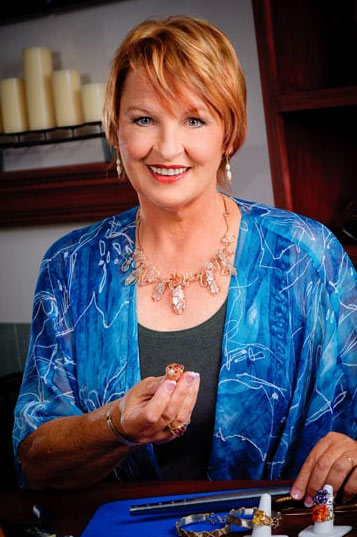
Dale Armstrong
Other Articles by Dale Armstrong
 Getting Twisted - Jewelry Making Tools
 How to Price Your Wire Jewelry
 How to Measure Gemstones for Settings
 Cool Anklets are HOT
 Inspiration Comes from Everywhere and Every Thing
 Wire Jewelry Display and Booth Ideas
 Where to Sell Your Wire Jewelry
 How to Choose Wire Temper for Making Jewelry
 What Gauge of Wire Should I Use to Make Jewelry
 What's a Cubic Zirconia Stone
 Rockhounding - A Beginner's Guide
 What Shape of Wire Should I Use to Make Jewelry
 Gem Profile- Bloodstone
 Gem Profile- Picture Jasper
 Gem Profile- Patterned Jaspers
 Gem Profile- What is Jasper
 Gem Profile- Quartz Introduction
 Gem Profile- Wishful Turquoise
 Gem Profile- Amethyst
 Gem Profile- Fluorite
 Gem Profile- Obsidian
 Gem Profile- Rose Quartz
 Gem Profile- Smoky Quartz
 Gem Profile- Citrine and Ametrine
 Gem Profile- Labradorite
 Gem Profile- Rhodochrosite
 Gem Profile- Moonstone
 Gem Profile- Prehnite
 Gem Profile- Jade
 Gem Profile- Amazonite
 Gem Profile- Corundum
 Gem Profile- Quartz with Inclusions Part 1
 Gem Profile- Quartz with Inclusions Part 2
 Gem Profile- Aventurine
 Gem Profile- Macrocrystalline Quartz
 Gem Profile- Tiger Eye
 Gem Profile- Fire Agate and Iris Agate
 Gem Profile- Amber
 Gem Profile- Ruby Zoisite
 Gem Profile- Ruby Fuchsite
 Gem Profile- Charoite
 Gem Profile- Moldavite
 Gem Profile- Ammolite
 Gem Profile- White Precious Opal
 Gem Profile- Opalized Fossils
 Gem Profile- Boulder Opal
 Gem Profile- Black Precious Opal
 Gem Profile- Pyrite
 Gem Profile- Beautifully Colored Jasper
 Gem Profile- Common Opal
 Gem Profile- Lapis Lazuli
 Wire Sculpture Expert Dale -Cougar- Armstrong Interview

The premier place for all your jewelry making needs. The best in wire, tools, cabochons, gemstone beads and more. As well as a superior resource for educational support to help build your jewelry making skills and techniques.
Connect With Us

® 2007 - 2026 Wirejewelry.com Powered by ClaimTheWeb Cart