




Gem Profile- Kyanite
What is Kyanite?
Kyanite ("kI-ah-nIt") is often translucent with some opacity. While kyanite is named after "kyanos," the Greek word for blue, kyanite can be pink, yellow, white, gray, and even green-blue with patches absent of color. Some mineralogists guessed that titanium impurities gave kyanite its blue hue, but others think that iron might be responsible. Orange kyanite has been found in Tanzania, where manganese particles caused the coloration.
Kyanite ("kI-ah-nIt") is often translucent with some opacity. While kyanite is named after "kyanos," the Greek word for blue, kyanite can be pink, yellow, white, gray, and even green-blue with patches absent of color. Some mineralogists guessed that titanium impurities gave kyanite its blue hue, but others think that iron might be responsible. Orange kyanite has been found in Tanzania, where manganese particles caused the coloration.
Kyanite forms in long, flattened crystals, and in rare specimens this structure can create chatoyancy.
Some pieces show a cat's-eye effect, although most do not.
In uncommon cases, kyanite is pleochroic (similar to iolite or tanzanite), meaning it can display different colors under different lighting conditions.
Some pieces show a cat's-eye effect, although most do not.
In uncommon cases, kyanite is pleochroic (similar to iolite or tanzanite), meaning it can display different colors under different lighting conditions.
At the time this article was written Wirejewelry has a limited number of One of a Kind Designer cabochons in Kyanite. Click here to check them out while they last: Kayanite Cabochons


Kyanite Names and Kyanite Imitations
Kyanite was spelled "cyanite" by mineralogists in the 1800s and early 1900s, which is the French spelling. Kyanite was given its name by Abraham Werner in 1789. Kyanite is related to andalusite and silimanite, and of the three, kyanite forms under the highest pressuer. It is often found along with garnet and corundum (ruby and sapphire).
Kyanite has also been called blue talc and sappare. Excellent-quality deep blue kyanite without many inclusions can resemble sapphire, so much that a Swiss mineralogist, Saussure, misidentified a specimen as sapphire (sappare) in France. Despite realizing the mistake, sometimes kyanite is still called sappare. On rare occasions, you may see "disthene" refer to blue kyanite, as opposed to "rhaeticite" for white and gray kyanite.
Kyanite is made up of aluminum, silicon, and oxygen, with its scientific formula being Al2(SiO4)O. While good kyanite is highly rare and valuable, there is no real "synthetic kyanite" on the market. If you see this label at a gem show, beware! Fake kyanite might actually be blue quartz or glass.
Kyanite slices, each about the size of my open hand, that I found in Tucson last year. Check out the variety of color and depth of color, too.
Kyanite was spelled "cyanite" by mineralogists in the 1800s and early 1900s, which is the French spelling. Kyanite was given its name by Abraham Werner in 1789. Kyanite is related to andalusite and silimanite, and of the three, kyanite forms under the highest pressuer. It is often found along with garnet and corundum (ruby and sapphire).
Kyanite has also been called blue talc and sappare. Excellent-quality deep blue kyanite without many inclusions can resemble sapphire, so much that a Swiss mineralogist, Saussure, misidentified a specimen as sapphire (sappare) in France. Despite realizing the mistake, sometimes kyanite is still called sappare. On rare occasions, you may see "disthene" refer to blue kyanite, as opposed to "rhaeticite" for white and gray kyanite.
Kyanite is made up of aluminum, silicon, and oxygen, with its scientific formula being Al2(SiO4)O. While good kyanite is highly rare and valuable, there is no real "synthetic kyanite" on the market. If you see this label at a gem show, beware! Fake kyanite might actually be blue quartz or glass.
Kyanite slices, each about the size of my open hand, that I found in Tucson last year. Check out the variety of color and depth of color, too.

Softer than Sapphire, but Harder to Cut
Kyanite is known for its unusual characteristics, including anisotropism, which means it gives different measurements depending on the direction tested.
Because of this internal structure, kyanite can range from 4 to 5 in one direction and 6.5 to 7 in another on the Mohs scale.
Kyanite is also very brittle, so jewelers usually use it in earrings and pendants rather than rings or bracelets.
Store kyanite jewelry separately in its own pouch or box to prevent cracking or scratching.
These traits make kyanite easy to identify, but they also make it challenging to cut into gem-quality stones.
Terri McMahon used light and dark blue kyanite beads on a triangular sterling silver wire frame to create earrings with gentle movement.
Kyanite is known for its unusual characteristics, including anisotropism, which means it gives different measurements depending on the direction tested.
Because of this internal structure, kyanite can range from 4 to 5 in one direction and 6.5 to 7 in another on the Mohs scale.
Kyanite is also very brittle, so jewelers usually use it in earrings and pendants rather than rings or bracelets.
Store kyanite jewelry separately in its own pouch or box to prevent cracking or scratching.
These traits make kyanite easy to identify, but they also make it challenging to cut into gem-quality stones.
Terri McMahon used light and dark blue kyanite beads on a triangular sterling silver wire frame to create earrings with gentle movement.

Kyanite can be cut into faceted gems when it is translucent, or shaped into cabochons when it is translucent or opaque.
Faceting is difficult because of the stone's structure and because large translucent pieces are rare, typically no more than two carats.
Only about one to two percent of all kyanite rough is suitable for faceting.
Mid-grade kyanite is far more common and often appears at gem shows as beads or cabochons in denim to sky-blue tones.
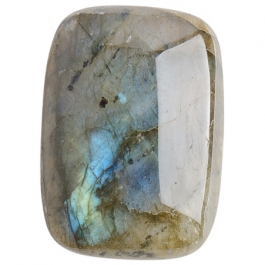
In many cabochons, dark blue patches glide along the needle-like inclusions that run through the stone.
Because kyanite is highly directional, similar to a plank of wood with long fiber-like crystals, beads are usually cut into flattened or elongated oval shapes.
The finest kyanite currently comes from Nepal and Tibet, with additional gem-quality sources in Brazil, Kenya, the United States, and Russia.
Lower-grade kyanite is abundant worldwide and frequently used in ceramics, electronics, abrasives, and even spark plugs.
Terri McMahon wrapped this occluded quartz crystal in sterling silver and copper wire and accented the piece with three kyanite needle beads.
Faceting is difficult because of the stone's structure and because large translucent pieces are rare, typically no more than two carats.
Only about one to two percent of all kyanite rough is suitable for faceting.
Mid-grade kyanite is far more common and often appears at gem shows as beads or cabochons in denim to sky-blue tones.
In many cabochons, dark blue patches glide along the needle-like inclusions that run through the stone.
Because kyanite is highly directional, similar to a plank of wood with long fiber-like crystals, beads are usually cut into flattened or elongated oval shapes.
The finest kyanite currently comes from Nepal and Tibet, with additional gem-quality sources in Brazil, Kenya, the United States, and Russia.
Lower-grade kyanite is abundant worldwide and frequently used in ceramics, electronics, abrasives, and even spark plugs.
Terri McMahon wrapped this occluded quartz crystal in sterling silver and copper wire and accented the piece with three kyanite needle beads.

Because the color blue is associated with the throat chakra, speakers and people who would like assistance communicating are said to benefit from wearing kyanite around the neck.
While kyanite is not a birthstone, it is associated with the zodiac signs Aries, Taurus, and Libra.
While kyanite is not a birthstone, it is associated with the zodiac signs Aries, Taurus, and Libra.
Resources & Recommended Reading
Kyanite on Wikipedia
On the Origin of Colour and Pleochroism of Kyanite Click Here
Kyanite on Ganoksin by Edna Anthony: www.ganoksin.com
Kyanite on MinDat.org
Kyanite on Wikipedia
On the Origin of Colour and Pleochroism of Kyanite Click Here
Kyanite on Ganoksin by Edna Anthony: www.ganoksin.com
Kyanite on MinDat.org
Materials

Wire

Designer Cabochons

Cabochons by Gemstone

Beads

Bench Tools
Tools

WireJewelry - Ultimate Wire-Pliers Jewelry Pliers with Case, Set of 5
G15-20
- G15-20
- Lesson Quantity: 1.00 pieces
- Purchase Quantity: 1.00 each
- Price: $170.72
- Gold Club Price: $128.04
Bench Tools
Supply Detail
loading...
Change Metal:
This Article requires:
Purchase quantity:
Price: $
Gold Club Price: $
Purchase quantity:
Price: $
Gold Club Price: $
- Category: General Education
- Technique(s): General Education
Other Articles by Judy Ellis
 About Jewelry Chain- About Ball Chain
 About Jewelry Chain- Snake Chain and Omega Chain
 About Jewelry Chain- Bar Chain and Peanut Chain
 About Jewelry Chain - Cable Chain and Rolo Chain
 About Jewelry Chain- Curb Chain and Gourmette Chain
 About Jewelry Chain- Figaro Chain
 About Jewelry Chain- Infinity Chain and Anchor Chain
 About Jewelry Chain- Chain Reference Sheet
 About Jewelry Chain- Venetian Chain and Box Chain
 About Jewelry Chain- Wheat Chain and Rope Chain
 Introduction to Chain
 Access More Money by Making Jewelry When Your Prices Are Right
 An Introduction to Beads and Beading
 Common Gemstone Misconceptions
 Wire Wrapped Christmas Tree
 How To Polish Metal Jewelry using a Rotary Tumbler
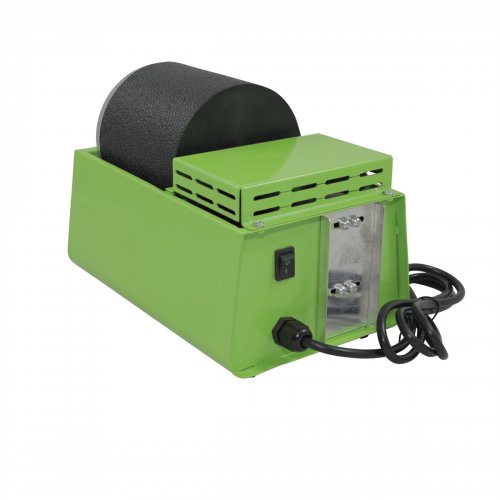 How To Polish Your Own Rocks using a Rotary Rock Tumbler
 How to Merchandise Your Jewelry on the Internet
 How to Use Twitter as a Wire Jewelry Artist
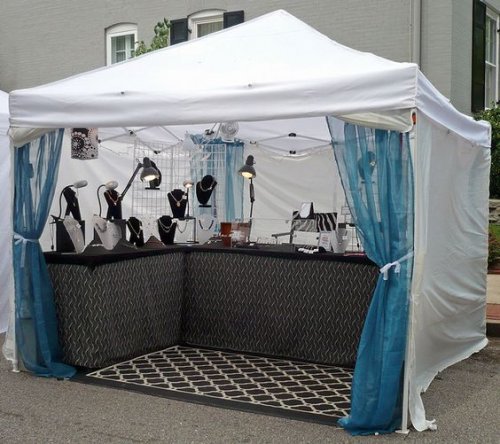 20 Ideas to get your Jewelry Biz Busy
 Watching the Precious Metals Market
 Jewelry Design Ideas - Get Inspired
 Measuring Tools
 July Birthstone - The Ruby
 February Birthstone- Amethyst
 March Birthstone - Aquamarine and Bloodstone
 September Birthstone - Sapphire
 November Birthstones - Topaz and Citrine
 October Birthstones - Rose Zircon, Pink Tourmaline and Opal
 April Birthstone - The Diamond
 August Birthstone - Peridot and Sardonyx
 June Birthstones - Alexandrite, Pearl and Moonstone
 Metalsmithing
 Featured Tool - Mini TruStrike Hammers
 Natural Jasper Stones - Cabochon Gemstones
 Organize Your Jewelry Box
 Pearls- It's a Cultural Thing
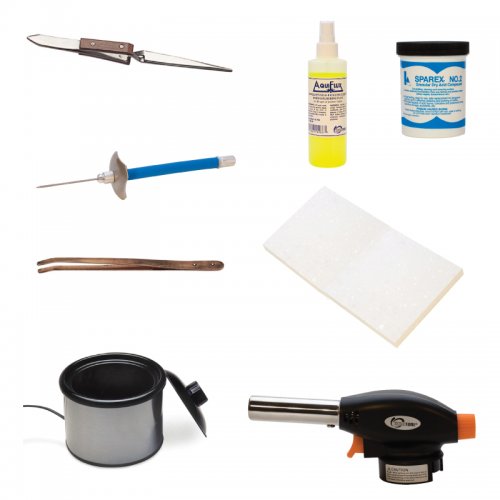 Soldering 101
 Starting Your Own Home Jewelry Business
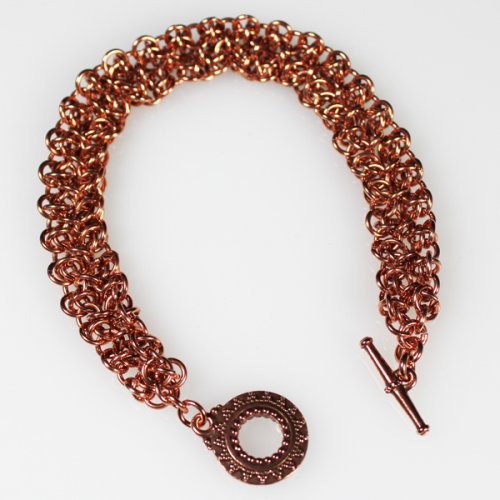 The Art of Creating Chainmail
 Why Should I Be Using Facebook
 Make Handmade Neck Cords on a Dime
 Tagging Handmade Jewelry Gifts
 Share Your Expertise with Your Community
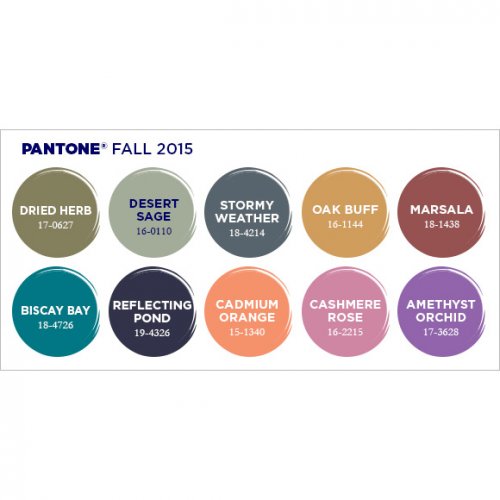 Creating Color Schemes for Jewelry Making
 Bronze, Brass, Nickel Silver and Copper Base Metals
 Gemstone Treatments
 How Wire is Made
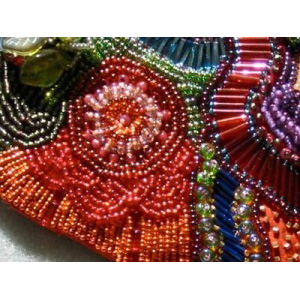 Beading A-B-C's
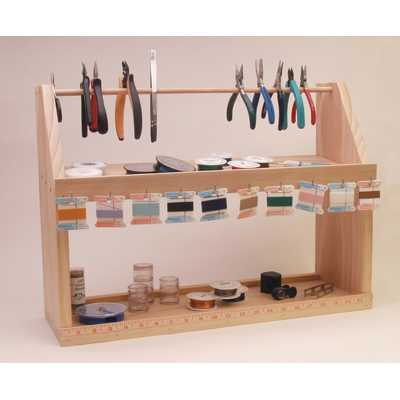 How to Set Up Your Workspace
 Gem Profile- Diamond
 Gem Profile- Peridot
 Gem Profile- Goldstone
 Gem Profile- Cryptocrystalline Quartz Introduction
 Gem Profile- Banded Agate and Brecciated Agate
 Gem Profile- Emerald
 Gem Profile- Titanite or Sphene
 Gem Profile- Morganite
 Gem Profile- Desert Rose
 Gem Profile- Iolite
 Gem Profile- Zultanite
 Gem Profile- Maw Sit Sit
 Gem Profile- Tanzanite
 Gem Profile- Aquamarine
 Gem Profile- Turquoise
 Gem Profile- Turquoise Types
 Gem Profile- What's Druze
 Gem Profile- Basalt
 Gem Profile- Fordite
 Gem Profile- Variscite
 Gem Profile- Pearls
 Gem Profile- Onyx
 Gem Profile- Sunstone
 Gem Profile- Sonora Sunrise
 Gem Profile- Rhodonite
 Gem Profile- Glass, Crystal and Quartz
 Gem Profile- Psilomelane
 Gem Profile- Fulgurite
 Gem Profile- Cat's Eye
 Gem Profile- Carnelian
 Gem Profile- Petoskey Stones and Indonesian Fossil Coral
 Gem Profile- Rutilated Quartz
 Gem Profile- Chrysocolla
 Gem Profile- Jet
 Gem Profile- Chrysoprase
 Gem Profile- Rhyolite
 Gem Profile- Chalcedony
 Gem Profile- Lepidolite and Sugilite
 Gem Profile- Unakite
 Gem Profile- Cowrie Shells, Conch Shells, and Drilling Shells
 Gem Profile- Mother of Pearl
 Gem Profile- Moss Agate and Plume Agate
 Gem Profile- Thundereggs and Mexican Lace Agate
 Gem Profile- Dumortierite
 Gem Profile- Apatite
 Gem Profile- Blue Topaz
 Gem Profile- Aragonite
 Gem Profile- Zircon and Cubic Zirconia
 Gem Profile- Topaz
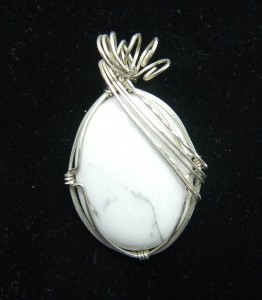 Gem Profile- Howlite
 Gem Profile- Sodalite
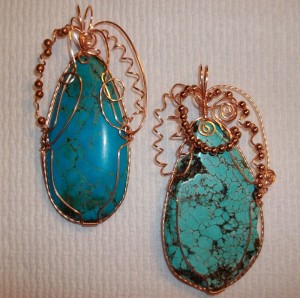 Gem Profile- Magnesite
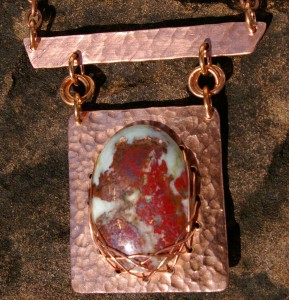 Gem Profile- Cuprite
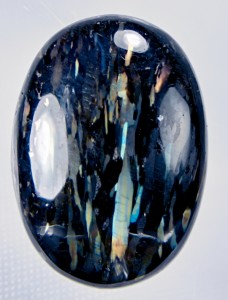 Gem Profile- Nuummite
 Gem Profile- Bronzite
 Gem Profile- Hematite
 Gem Profile- Derbyshire Blue John
 Gem Profile- Eilat Stone
 Gem Profile- Vesuvianite
 Gem Profile- Strontium Titanate -Fabulite
 Gem Profile- Tourmaline
 Gem Profile- Larimar
 Gem Profile- Garnet
 Gem Profile- Tsavorite and Green Garnets
 Gem Profile- Seraphinite
 Gem Profile- Serpentine
 American Wire Gauge
 Viking Knit and Spool Knit Chain
 Copper Roses
 How to Make Medical ID Bracelets Special
 Remembering the Fallen
 6 Ways to Find Your Uniqueness in Jewelry
 Gem Profile- Moissanite
 Birthstone Swarovski Colors
 Gem profile- Paua and Abalone
 Tips for Tucson Shopping- Gem Show Secrets
 Durston Olivia Rolling Mills
 How to Use a Jewelry Bench Polisher Effectively
 5 Jewelry Patterns to Keep Summer Going
 Why Jewelry Makers Love Boho And Free-Form Designs
 5 Fall Leaf Jewelry Patterns to Capture the Colors of Autumn
 Bold Gemstone Wire Jewelry Tutorials for Beginners
 Why Remodeling Old Designs Saves You Money and Sparks Creativity
 Make Something Magical This Halloween Season
 5 Must-Make Holiday Jewelry Projects That Bring the Festive Fun
 Our Most-Loved Jewelry-Making Patterns of 2025
 Our Most-Loved Jewelry-Making Tips And Techniques of 2025

The premier place for all your jewelry making needs. The best in wire, tools, cabochons, gemstone beads and more. As well as a superior resource for educational support to help build your jewelry making skills and techniques.
Connect With Us

® 2007 - 2026 Wirejewelry.com Powered by ClaimTheWeb Cart