




Gem Profile- Jet
Jet
This week I think we'll start with a road trip! We'll be "leaving on a jet plane" destined for Whitby England, which is on the Yorkshire Coast. There we'll be visiting the W. Hamond Boutique which has been in business since the 1860's selling a stone that Shakespeare described in Henry VI as "Coal-black as Jet."
This week I think we'll start with a road trip! We'll be "leaving on a jet plane" destined for Whitby England, which is on the Yorkshire Coast. There we'll be visiting the W. Hamond Boutique which has been in business since the 1860's selling a stone that Shakespeare described in Henry VI as "Coal-black as Jet."
Whitby is a typical English fishing town, complete with cobbled streets, quaint shops, and a beautiful Abbey that overlooks the village.
If you walk along the beach, you may notice certain spots in the cliffs. These areas show where holes have been dug out, filled in, or eroded away.
You can also see portions of the cliffs where large sections or lines of black rock stand out against the grey shale.
These specific sections are called a "jet line," and this is where our gemstone story really begins.
Pictured: W Hamond Whitby Jewelery Boutique.
Photo courtesy of W. Hamond Whitney Boutique and A distinctive shale or 'Jet line' on the cliff face. Photo courtesy of W. Hamond.
If you walk along the beach, you may notice certain spots in the cliffs. These areas show where holes have been dug out, filled in, or eroded away.
You can also see portions of the cliffs where large sections or lines of black rock stand out against the grey shale.
These specific sections are called a "jet line," and this is where our gemstone story really begins.
Pictured: W Hamond Whitby Jewelery Boutique.
Photo courtesy of W. Hamond Whitney Boutique and A distinctive shale or 'Jet line' on the cliff face. Photo courtesy of W. Hamond.


What is Jet?
Millions of years ago, during the Jurassic period, carboniferous forests grew in this part of England.
A prominent tree was one similar to our modern Araucaria, or Monkey Puzzle tree.
These large trees would die and be washed into the sea, or carried out during violent storms. The logs would become waterlogged and sink to the ocean floor near the shore.
As millennia passed, silt and sand encased these logs, compressing them into the substance we now know as Jet.
Jet is a form of Lignite, a variety of coal. Although considered lignite, Jet is denser than common lignite.
It is a soft material, rating 2.5-4 on the Mohs scale, but it can take a nice polish.
Jet is found worldwide, but the Jet from Whitby, England, is especially prized.
Whitby Jet is a true black with few inclusions and can be easily worked on a lathe or in carvings.
Millions of years ago, during the Jurassic period, carboniferous forests grew in this part of England.
A prominent tree was one similar to our modern Araucaria, or Monkey Puzzle tree.
These large trees would die and be washed into the sea, or carried out during violent storms. The logs would become waterlogged and sink to the ocean floor near the shore.
As millennia passed, silt and sand encased these logs, compressing them into the substance we now know as Jet.
Jet is a form of Lignite, a variety of coal. Although considered lignite, Jet is denser than common lignite.
It is a soft material, rating 2.5-4 on the Mohs scale, but it can take a nice polish.
Jet is found worldwide, but the Jet from Whitby, England, is especially prized.
Whitby Jet is a true black with few inclusions and can be easily worked on a lathe or in carvings.

About Jet:
Jet has been known throughout the European region for centuries.
Early specimens have been found in Germany, dating to around 10,000 BC, and in Spain, dating to around 17,000 BC.
The Romans were very familiar with Jet, calling it Gagat. They made beads, buttons, and carvings found in and around Whitby.
Bronze Age people also used Jet for carvings, beads, bracelets, and amulets.
Anciently, Jet was thought to ward off evil spirits and protect its wearer from harm.
Monks in the Abbey also used Jet to carve rosaries and other ornamental items.
Even Shakespeare was familiar with Jet and referenced it in several of his plays and sonnets.
Jet gained popularity during the Victorian Age after being displayed at the 1851 Great Exhibition in London.
There, it caught the attention of royalty in Bavaria and France.
Jet became truly popular when Queen Victoria began wearing it as part of her mourning jewelry after her husband, Prince Albert, passed away.
Jet is dense, but soft and light. Therefore, it can be carved into intricate patterns without losing the integrity of the stone. It takes on a beautiful sheen when polished with rouge.
Jet has been known throughout the European region for centuries.
Early specimens have been found in Germany, dating to around 10,000 BC, and in Spain, dating to around 17,000 BC.
The Romans were very familiar with Jet, calling it Gagat. They made beads, buttons, and carvings found in and around Whitby.
Bronze Age people also used Jet for carvings, beads, bracelets, and amulets.
Anciently, Jet was thought to ward off evil spirits and protect its wearer from harm.
Monks in the Abbey also used Jet to carve rosaries and other ornamental items.
Even Shakespeare was familiar with Jet and referenced it in several of his plays and sonnets.
Jet gained popularity during the Victorian Age after being displayed at the 1851 Great Exhibition in London.
There, it caught the attention of royalty in Bavaria and France.
Jet became truly popular when Queen Victoria began wearing it as part of her mourning jewelry after her husband, Prince Albert, passed away.
Jet is dense, but soft and light. Therefore, it can be carved into intricate patterns without losing the integrity of the stone. It takes on a beautiful sheen when polished with rouge.

Tying it all together!
Now that you are interested in the beauty of Jet, let's look again at the W. Hamond shop and museum.
Here, you can tour a Victorian Jet workshop that was discovered in a boarded-up building in town. You can also speak with the artisans and purchase beautiful Jet specimens, either rough or set in jewelry.
The government has never allowed formal excavation or mining of Jet. However, Victorian Age workmen would find and excavate the Jet from the cliffs and then fill in the rock afterward.
They would also simply pick up loose pieces of Jet found right on the beach.
Now that you are interested in the beauty of Jet, let's look again at the W. Hamond shop and museum.
Here, you can tour a Victorian Jet workshop that was discovered in a boarded-up building in town. You can also speak with the artisans and purchase beautiful Jet specimens, either rough or set in jewelry.
The government has never allowed formal excavation or mining of Jet. However, Victorian Age workmen would find and excavate the Jet from the cliffs and then fill in the rock afterward.
They would also simply pick up loose pieces of Jet found right on the beach.
A "little" piece of history:
W. Hamond is the proud owner of the largest Jet gemstone known; at 21ft in length and 180 million years old, it is truly a marvel of nature and a piece of history.
W. Hamond employees recreate a bygone era as they hold part of the World's largest Whitby Jet gemstone. Photo courtesy of W. Hamond.
W. Hamond is the proud owner of the largest Jet gemstone known; at 21ft in length and 180 million years old, it is truly a marvel of nature and a piece of history.
W. Hamond employees recreate a bygone era as they hold part of the World's largest Whitby Jet gemstone. Photo courtesy of W. Hamond.

*A special thanks this week goes to the W. Hamond shop for the information provided to us at Tucson this past year, and to Chris Sellors specifically.
For more information on Whitby Jet, please follow this link to the W.
Hamond site where you can not only take a look at their products, but also the history of Jet and some wonderful pictures of Jet from excavation through the finishing process.
Resources & Recommended Reading
W. Hamond Whitby - the Original Whitby Jet Shop - https://whamond.com/
For more information on Whitby Jet, please follow this link to the W.
Hamond site where you can not only take a look at their products, but also the history of Jet and some wonderful pictures of Jet from excavation through the finishing process.
Resources & Recommended Reading
W. Hamond Whitby - the Original Whitby Jet Shop - https://whamond.com/
Materials

Wire

13mm Jet Swarovski Skull Bead - Pack of 1
A13-301
- Lesson Quantity: 1.00 pieces
- Purchase Quantity: 1.00 each
- Price: $9.57
- Gold Club Price: $7.18

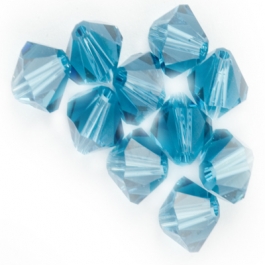
4mm Jet 5328 Bi-Cone Swarovski Crystal Beads - Pack of 10
A13-93A
- Lesson Quantity: 1.00 pieces
- Purchase Quantity: 1.00 each
- Price: $1.57
- Gold Club Price: $1.18

6mm Jet 5328 Bi-Cone Swarovski Crystal Beads - Pack of 10
A13-93B
- Lesson Quantity: 1.00 pieces
- Purchase Quantity: 1.00 each
- Price: $2.97
- Gold Club Price: $2.23

8mm Jet 5328 Bi-Cone Swarovski Crystal Beads - Pack of 6
A13-93C
- Lesson Quantity: 1.00 pieces
- Purchase Quantity: 1.00 each
- Price: $3.47
- Gold Club Price: $2.60

Beads

Cabochons
Tools

WireJewelry - Ultimate Wire-Pliers Jewelry Pliers with Case, Set of 5
G15-20
- G15-20
- Lesson Quantity: 1.00 pieces
- Purchase Quantity: 1.00 each
- Price: $170.72
- Gold Club Price: $128.04

Bench Tools
Supply Detail
loading...
Change Metal:
This Article requires:
Purchase quantity:
Price: $
Gold Club Price: $
Purchase quantity:
Price: $
Gold Club Price: $
- Category: General Education
- Technique(s): General Education
Other Articles by Judy Ellis
 About Jewelry Chain- About Ball Chain
 About Jewelry Chain- Snake Chain and Omega Chain
 About Jewelry Chain- Bar Chain and Peanut Chain
 About Jewelry Chain - Cable Chain and Rolo Chain
 About Jewelry Chain- Curb Chain and Gourmette Chain
 About Jewelry Chain- Figaro Chain
 About Jewelry Chain- Infinity Chain and Anchor Chain
 About Jewelry Chain- Chain Reference Sheet
 About Jewelry Chain- Venetian Chain and Box Chain
 About Jewelry Chain- Wheat Chain and Rope Chain
 Introduction to Chain
 Access More Money by Making Jewelry When Your Prices Are Right
 An Introduction to Beads and Beading
 Common Gemstone Misconceptions
 Wire Wrapped Christmas Tree
 How To Polish Metal Jewelry using a Rotary Tumbler
 How To Polish Your Own Rocks using a Rotary Rock Tumbler
 How to Merchandise Your Jewelry on the Internet
 How to Use Twitter as a Wire Jewelry Artist
 20 Ideas to get your Jewelry Biz Busy
 Watching the Precious Metals Market
 Jewelry Design Ideas - Get Inspired
 Measuring Tools
 July Birthstone - The Ruby
 February Birthstone- Amethyst
 March Birthstone - Aquamarine and Bloodstone
 September Birthstone - Sapphire
 November Birthstones - Topaz and Citrine
 October Birthstones - Rose Zircon, Pink Tourmaline and Opal
 April Birthstone - The Diamond
 August Birthstone - Peridot and Sardonyx
 June Birthstones - Alexandrite, Pearl and Moonstone
 Metalsmithing
 Featured Tool - Mini TruStrike Hammers
 Natural Jasper Stones - Cabochon Gemstones
 Organize Your Jewelry Box
 Pearls- It's a Cultural Thing
 Soldering 101
 Starting Your Own Home Jewelry Business
 The Art of Creating Chainmail
 Why Should I Be Using Facebook
 Make Handmade Neck Cords on a Dime
 Tagging Handmade Jewelry Gifts
 Share Your Expertise with Your Community
 Creating Color Schemes for Jewelry Making
 Bronze, Brass, Nickel Silver and Copper Base Metals
 Gemstone Treatments
 How Wire is Made
 Beading A-B-C's
 How to Set Up Your Workspace
 Gem Profile- Diamond
 Gem Profile- Peridot
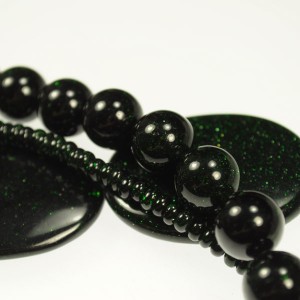 Gem Profile- Goldstone
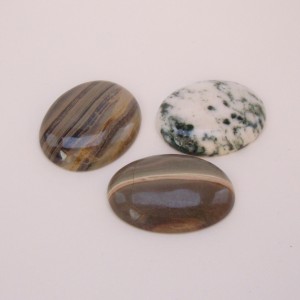 Gem Profile- Cryptocrystalline Quartz Introduction
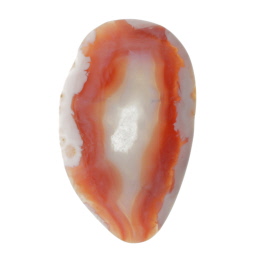 Gem Profile- Banded Agate and Brecciated Agate
 Gem Profile- Emerald
 Gem Profile- Titanite or Sphene
 Gem Profile- Morganite
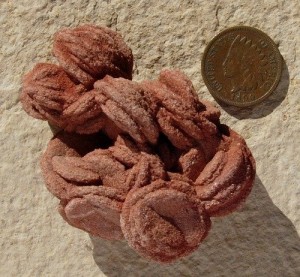 Gem Profile- Desert Rose
 Gem Profile- Iolite
 Gem Profile- Zultanite
 Gem Profile- Maw Sit Sit
 Gem Profile- Tanzanite
 Gem Profile- Aquamarine
 Gem Profile- Turquoise
 Gem Profile- Turquoise Types
 Gem Profile- What's Druze
 Gem Profile- Basalt
 Gem Profile- Fordite
 Gem Profile- Variscite
 Gem Profile- Pearls
 Gem Profile- Onyx
 Gem Profile- Sunstone
 Gem Profile- Sonora Sunrise
 Gem Profile- Rhodonite
 Gem Profile- Glass, Crystal and Quartz
 Gem Profile- Psilomelane
 Gem Profile- Fulgurite
 Gem Profile- Cat's Eye
 Gem Profile- Carnelian
 Gem Profile- Petoskey Stones and Indonesian Fossil Coral
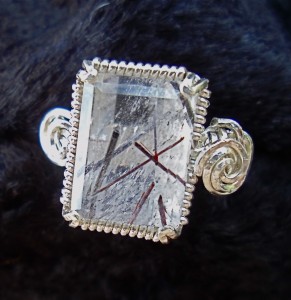 Gem Profile- Rutilated Quartz
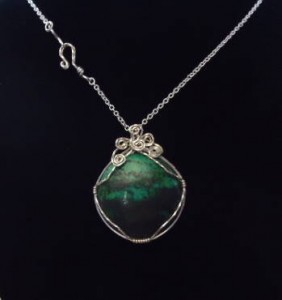 Gem Profile- Chrysocolla
 Gem Profile- Chrysoprase
 Gem Profile- Rhyolite
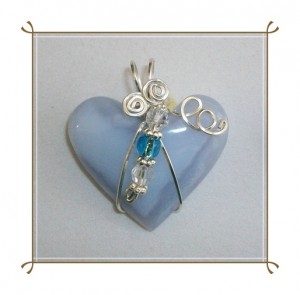 Gem Profile- Chalcedony
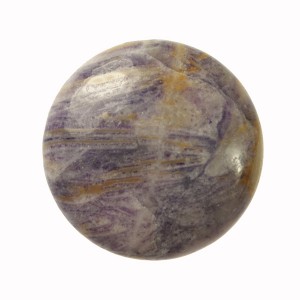 Gem Profile- Lepidolite and Sugilite
 Gem Profile- Unakite
 Gem Profile- Cowrie Shells, Conch Shells, and Drilling Shells
 Gem Profile- Mother of Pearl
 Gem Profile- Moss Agate and Plume Agate
 Gem Profile- Thundereggs and Mexican Lace Agate
 Gem Profile- Dumortierite
 Gem Profile- Apatite
 Gem Profile- Blue Topaz
 Gem Profile- Aragonite
 Gem Profile- Zircon and Cubic Zirconia
 Gem Profile- Topaz
 Gem Profile- Howlite
 Gem Profile- Sodalite
 Gem Profile- Magnesite
 Gem Profile- Cuprite
 Gem Profile- Nuummite
 Gem Profile- Bronzite
 Gem Profile- Kyanite
 Gem Profile- Hematite
 Gem Profile- Derbyshire Blue John
 Gem Profile- Eilat Stone
 Gem Profile- Vesuvianite
 Gem Profile- Strontium Titanate -Fabulite
 Gem Profile- Tourmaline
 Gem Profile- Larimar
 Gem Profile- Garnet
 Gem Profile- Tsavorite and Green Garnets
 Gem Profile- Seraphinite
 Gem Profile- Serpentine
 American Wire Gauge
 Viking Knit and Spool Knit Chain
 Copper Roses
 How to Make Medical ID Bracelets Special
 Remembering the Fallen
 6 Ways to Find Your Uniqueness in Jewelry
 Gem Profile- Moissanite
 Birthstone Swarovski Colors
 Gem profile- Paua and Abalone
 Tips for Tucson Shopping- Gem Show Secrets
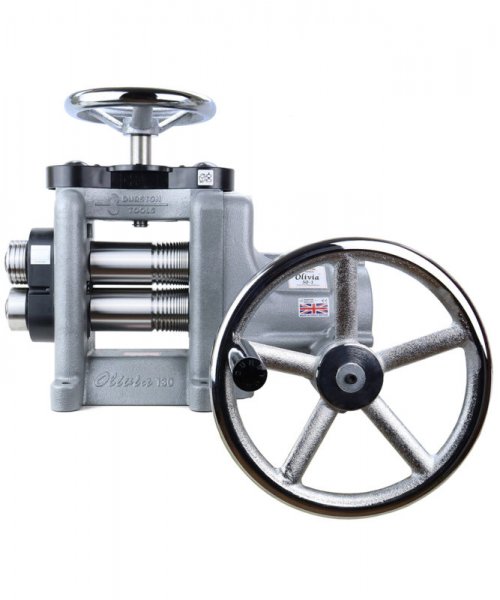 Durston Olivia Rolling Mills
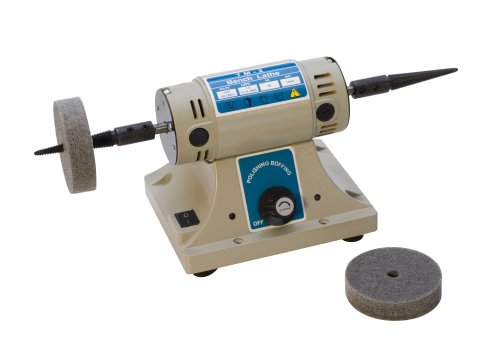 How to Use a Jewelry Bench Polisher Effectively
 5 Jewelry Patterns to Keep Summer Going
 Why Jewelry Makers Love Boho And Free-Form Designs
 5 Fall Leaf Jewelry Patterns to Capture the Colors of Autumn
 Bold Gemstone Wire Jewelry Tutorials for Beginners
 Why Remodeling Old Designs Saves You Money and Sparks Creativity
 Make Something Magical This Halloween Season
 Our Most-Loved Jewelry-Making Patterns of 2025
 Our Most-Loved Jewelry-Making Tips And Techniques of 2025

The premier place for all your jewelry making needs. The best in wire, tools, cabochons, gemstone beads and more. As well as a superior resource for educational support to help build your jewelry making skills and techniques.
Connect With Us

® 2007 - 2026 Wirejewelry.com Powered by ClaimTheWeb Cart