









Disc Cutter Basics and How to Make Metal Washers
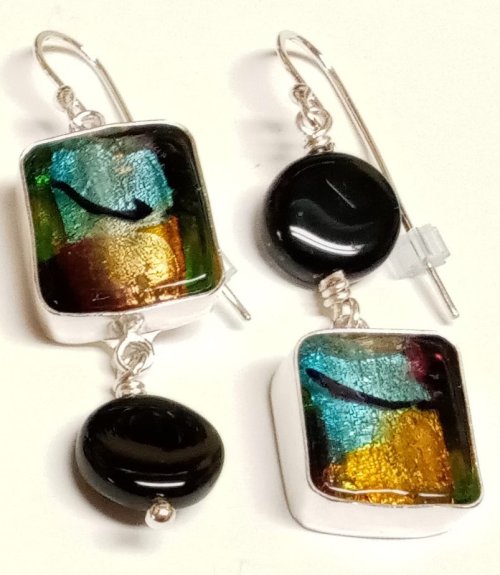
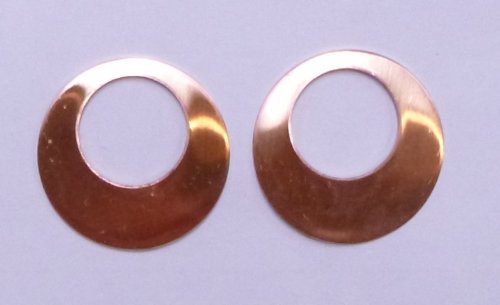
Making a washer with a perfectly centered circle can be a challenge, especially if centering punches are not available. If a matched pair is needed for a pair of earrings, eyeballing is not always going to work, as shown in the example on the left. This short tutorial can help. The following directions are written using economy disc cutter photos, but the directions are similar for all cutters.
Which cutter is best?
If you're just a weekend jeweler or unsure how often you'll use a cutter, an economy punch will work for you.
However, keep in mind that the cutting edge on economy punches won't last forever. The metal is softer than higher-end disc cutters and will dull with excessive use.
When you're ready to upgrade, you can pass it on to a beginner or keep it as a backup for traveling.
Whichever cutter you choose, it will last a long time if you use it properly and take care of it.
However, keep in mind that the cutting edge on economy punches won't last forever. The metal is softer than higher-end disc cutters and will dull with excessive use.
When you're ready to upgrade, you can pass it on to a beginner or keep it as a backup for traveling.
Whichever cutter you choose, it will last a long time if you use it properly and take care of it.
Economy disc cutters work best with 20 gauge or lighter metal.
Heavier-duty cutters can handle up to 18 gauge sheet.
Using dead soft or annealed metals will be easier on the cutting punches and help extend their life.
Heavier-duty cutters can handle up to 18 gauge sheet.
Using dead soft or annealed metals will be easier on the cutting punches and help extend their life.

Hints To Prolong the Life of a Disc Cutter
Pro Tip: Place a THIN plastic kitchen cutting mat, found at many dollar stores, under your disc cutter base. This will protect the cut discs and the cutting edges of the punches as they come through the cutter base after cutting.
Pro Tip: Make sure the work surface is flat and as non-giving as possible. That way, the circles will more likely to come out flat.
Pro Tip: To prolong the life of disc cutter punches and aid in cutting, get into the habit of twisting the cutting end of the punch in Cut Lube BEFORE each cut.
Pro Tip: With economy disc cutters, the punch will not go completely through the hole as it does with higher end models. Do not use a hammer or metal object to push it back up through the hole. The cutting surface could be damaged. To remove the punch, turn the cutter over and center it on top of a roll of wide painters tape, making sure the hammered end of the punch to be removed is inside the tape tube. Stacked books of equal height will also work. Place a wood dowel, slightly smaller than the diameter of the punch, in the center of the punch. Tap the dowel with a hammer until the punch drops out. Note: Make sure that the dowel end is clean and free of dirt or debris as this could harm the punch cutting surface.
Pro Tip: Because the metal can easily rust, store the disc cutter and punches in a dry place. Coating all the pieces in sewing machine oil can help inhibit rust and corrosion.


Directions:
Step 1: Select the two disc punches needed to make the desired finished product.
Step 2:Use an ultra fine point Sharpie marker to make a centering mark in the middle of the piece of metal to be cut.
If you're working with a small piece of metal and can't afford any waste such as when using precious metals follow the alternate Steps 2 through 4 instead.
If you're working with a small piece of metal and can't afford any waste such as when using precious metals follow the alternate Steps 2 through 4 instead.
If you're working with a small piece of metal and there's no room for waste such as when using precious metal follow these alternate steps to reduce error and material loss.
**Alternate Step 2:** Place the larger of the two selected disc punches on the sheet metal. Use an ultra fine point Sharpie marker to trace around it.
**Alternate Step 3:** Place the smaller disc punch inside the drawn circle, positioning it where you want the final cut. Trace around it with the Sharpie.
**Alternate Step 4:** Choose a disc punch one size smaller than the one used in Step 3. Center it inside the smallest drawn circle and trace around it with the Sharpie.
**Alternate Step 2:** Place the larger of the two selected disc punches on the sheet metal. Use an ultra fine point Sharpie marker to trace around it.
**Alternate Step 3:** Place the smaller disc punch inside the drawn circle, positioning it where you want the final cut. Trace around it with the Sharpie.
**Alternate Step 4:** Choose a disc punch one size smaller than the one used in Step 3. Center it inside the smallest drawn circle and trace around it with the Sharpie.
Step 5: Position the metal in the cutter, centering the centering mark or the smallest drawn circle under the hole that matches the disc punch used in Step 3.
Slide a piece of the same gauge metal between the two cutter base layers on the opposite side of the hole being cut.
Secure the cutter base layers together.
Place the disc punch into the hole with the cutting end facing the sheet metal.
Slide a piece of the same gauge metal between the two cutter base layers on the opposite side of the hole being cut.
Secure the cutter base layers together.
Place the disc punch into the hole with the cutting end facing the sheet metal.
Pro Tip: Economy Cutter: These cutters do not clamp down on the sheet metal to be cut, securing it into place, like the higher end ones do. Hint: The larger the piece of sheet metal, the more unwieldy it can be. Smaller pieces of sheet metal are easier to handle when using an economy cutter. Position the metal in the cutter, centering the centering mark or the smallest drawn circle under the hole size to be cut with the disc punch used in Step 3. Slide the disc punch from Step 3, cutting end toward the sheet metal, into the hole and press down on the metal to hold the metal in place.
Step 6:Use one or two firm hits with a brass mallet on the punch to cut the disc.
Lift the assembly, and the disc and punch will fall through the cutting hole.
Hint: A brass mallet is easier on your arm because it doesn't bounce back like a steel hammer. That's why it's called a *Dead Blow Hammer* - the strike stops dead in its tracks.
Economy Cutter Tip: While holding the disc punch firmly against the sheet metal, strike it once or twice with a brass mallet to cut the disc.
If the disc doesn't fall out when you lift the assembly, place it over a roll of wide painter's tape or between two books, ensuring there's nothing underneath the disc area.
Lightly tap the punch again so the cutting edge barely pushes through and the disc drops out.
Lift the assembly, and the disc and punch will fall through the cutting hole.
Hint: A brass mallet is easier on your arm because it doesn't bounce back like a steel hammer. That's why it's called a *Dead Blow Hammer* - the strike stops dead in its tracks.
Economy Cutter Tip: While holding the disc punch firmly against the sheet metal, strike it once or twice with a brass mallet to cut the disc.
If the disc doesn't fall out when you lift the assembly, place it over a roll of wide painter's tape or between two books, ensuring there's nothing underneath the disc area.
Lightly tap the punch again so the cutting edge barely pushes through and the disc drops out.


For a Centered Hole
Now for some fun! Centering punches for disc cutters are tubes with a pointed end.
They usually come in sets with sizes that correspond to the holes in a disc cutter and are great for centering holes to make washers.
But what if they are not available. Use doming punches!
They usually come in sets with sizes that correspond to the holes in a disc cutter and are great for centering holes to make washers.
But what if they are not available. Use doming punches!
Step 7:Center the small cut hole inside the larger hole to be cut.
Slide a piece of the same gauge metal between the two cutter base layers on the opposite side of the hole.
Select a doming punch with a spherical head that fits snugly into the hole to be cut. There should be little to no wiggle room around the sphere.
Holding the doming punch perpendicular to the cutting base, gently push down to center the small hole inside the larger one. The sheet metal should stay in place when you lightly try to move it side to side.
Keep the doming punch perpendicular and secure the cutter base layers together.
Remove the doming punch.
Place the disc punch into the hole, cutting end toward the sheet metal.
Economy Cutter Tip:
Have the larger disc punch ready next to the cutter base. Center the small cut hole inside the larger hole to be cut.
Use a doming punch with a snug spherical head and press it down gently to align the holes. The sheet should not shift when tested.
While holding the sheet metal in place, remove the doming punch and insert the disc punch, cutting end toward the metal. Press down to keep the sheet steady.
Slide a piece of the same gauge metal between the two cutter base layers on the opposite side of the hole.
Select a doming punch with a spherical head that fits snugly into the hole to be cut. There should be little to no wiggle room around the sphere.
Holding the doming punch perpendicular to the cutting base, gently push down to center the small hole inside the larger one. The sheet metal should stay in place when you lightly try to move it side to side.
Keep the doming punch perpendicular and secure the cutter base layers together.
Remove the doming punch.
Place the disc punch into the hole, cutting end toward the sheet metal.
Economy Cutter Tip:
Have the larger disc punch ready next to the cutter base. Center the small cut hole inside the larger hole to be cut.
Use a doming punch with a snug spherical head and press it down gently to align the holes. The sheet should not shift when tested.
While holding the sheet metal in place, remove the doming punch and insert the disc punch, cutting end toward the metal. Press down to keep the sheet steady.
Step 8:Use one or two firm hits with a brass mallet on the punch to cut the disc.
Lift the assembly, and the punch will fall through the cutting hole.
Economy Cutter Tip:
While holding the disc punch firmly against the sheet metal, strike it once or twice with a brass mallet to cut the disc.
If the disc doesn't fall out when you lift the assembly, place it on top of a roll of wide painter's tape or between two books. Make sure the area under the disc is open.
Lightly tap the punch so the cutting edge just barely pushes through and the disc drops out.
Lift the assembly, and the punch will fall through the cutting hole.
Economy Cutter Tip:
While holding the disc punch firmly against the sheet metal, strike it once or twice with a brass mallet to cut the disc.
If the disc doesn't fall out when you lift the assembly, place it on top of a roll of wide painter's tape or between two books. Make sure the area under the disc is open.
Lightly tap the punch so the cutting edge just barely pushes through and the disc drops out.


For an Offset Hole
Version 1: Using a Doming Punch to Position the Metal
Place the sheet metal in the cutting base. Move the small hole toward the edge of the larger circle opening until it's in the desired position. Hold the metal in place.
Select a doming punch that is smaller than the cutting hole. When positioned correctly, the punch should sit perpendicular in the hole, with the sphere just touching the edge of the cutting hole.
It may take a few tries to find the right size doming punch to guide the small hole into the proper position.
Make note of the doming punch size used so you can repeat the process consistently in the future.
That way, you can create matching sets without guesswork.
Place the sheet metal in the cutting base. Move the small hole toward the edge of the larger circle opening until it's in the desired position. Hold the metal in place.
Select a doming punch that is smaller than the cutting hole. When positioned correctly, the punch should sit perpendicular in the hole, with the sphere just touching the edge of the cutting hole.
It may take a few tries to find the right size doming punch to guide the small hole into the proper position.
Make note of the doming punch size used so you can repeat the process consistently in the future.
That way, you can create matching sets without guesswork.
Slide a piece of the same gauge metal between the two cutter base layers on the opposite side of the hole being cut.
Slide the sheet metal into place using the doming punch. Gently push down on the doming punch to center it in the hole. The sheet metal should stay in place when you gently try to move it side to side.
Hold the doming punch perpendicular to the cutting base, keeping the sphere tight against the edge of the cutting hole. Secure the two cutter base layers together.
Remove the doming punch. Place the larger disc punch into the hole, cutting end toward the sheet metal.
Economy Cutter Tip:
Have the larger hole punch ready next to the disc cutter base.
Slide the sheet metal into place with the doming punch and gently push down to center it. The sheet should remain steady when tested side to side.
Hold the doming punch perpendicular to the cutting base, keeping the sphere tight against the edge.
While holding the sheet metal in place, remove the doming punch and insert the hole punch, pressing down on the metal to keep it steady.
Slide the sheet metal into place using the doming punch. Gently push down on the doming punch to center it in the hole. The sheet metal should stay in place when you gently try to move it side to side.
Hold the doming punch perpendicular to the cutting base, keeping the sphere tight against the edge of the cutting hole. Secure the two cutter base layers together.
Remove the doming punch. Place the larger disc punch into the hole, cutting end toward the sheet metal.
Economy Cutter Tip:
Have the larger hole punch ready next to the disc cutter base.
Slide the sheet metal into place with the doming punch and gently push down to center it. The sheet should remain steady when tested side to side.
Hold the doming punch perpendicular to the cutting base, keeping the sphere tight against the edge.
While holding the sheet metal in place, remove the doming punch and insert the hole punch, pressing down on the metal to keep it steady.
Use one or two firm hits with a brass mallet on the punch to cut the disc.
Lift the assembly, and the punch will fall through the cutting hole.
Economy Cutter Tip:
While holding the disc punch firmly against the sheet metal, strike it once or twice with a brass mallet to cut the disc.
If the disc doesn't fall out when you lift the assembly, place it on top of a roll of wide painter's tape or between two books, ensuring nothing is underneath the disc.
Lightly tap the punch so the cutting edge just barely pushes through and the disc drops out.
Lift the assembly, and the punch will fall through the cutting hole.
Economy Cutter Tip:
While holding the disc punch firmly against the sheet metal, strike it once or twice with a brass mallet to cut the disc.
If the disc doesn't fall out when you lift the assembly, place it on top of a roll of wide painter's tape or between two books, ensuring nothing is underneath the disc.
Lightly tap the punch so the cutting edge just barely pushes through and the disc drops out.


Version 2 when no center positioning tool or doming punch is available:
Decide where you want the smaller hole to be inside the large disc.
In this case, make a mark 3/32" above the edge of the cut out circle.
Measure 3/32" out from the hole 1/4" on either side of the upper Sharpie mark and mark.
In this case, make a mark 3/32" above the edge of the cut out circle.
Measure 3/32" out from the hole 1/4" on either side of the upper Sharpie mark and mark.
Place the sheet metal in the cutting base.
Position the upper center mark on the edge of the opening for the chosen finished disc size. The 3/32" marks on either side of center will help align the hole.
Secure the metal in place.
Economy Cutter Tip:
Hold the metal steady. Have the larger hole punch ready next to the disc cutter base.
Slide the sheet metal into place, lining up the marks as described.
While holding the metal in place, insert the hole punch and press down to keep it steady.
Position the upper center mark on the edge of the opening for the chosen finished disc size. The 3/32" marks on either side of center will help align the hole.
Secure the metal in place.
Economy Cutter Tip:
Hold the metal steady. Have the larger hole punch ready next to the disc cutter base.
Slide the sheet metal into place, lining up the marks as described.
While holding the metal in place, insert the hole punch and press down to keep it steady.
Use one or two firm hits with a brass mallet on the punch to cut the disc.
Lift the assembly, and the punch will fall through the cutting hole.
Economy Cutter Tip:
While holding the disc punch firmly against the sheet metal, strike it once or twice with a brass mallet to cut the disc.
Lift the assembly, and the punch will fall through the cutting hole.
Economy Cutter Tip:
While holding the disc punch firmly against the sheet metal, strike it once or twice with a brass mallet to cut the disc.
Pro Tip: If the centered holes or off-set holes, shown, of a pair do not quite match because the metal or the punch moved before everything was secured for cutting, here is an easy fix to make the difference between the two pieces less noticeable. Set the less centered washer on top of the more centered one, matching the outer edges of the circles. Mark the new cutting line with a metal scribe or an ultra fine point Sharpie marker. Use a flex shaft or a Dremel tool with a sanding drum attached to sand down to the marked line.


Materials

18 Gauge 0.040 Dead Soft Copper Sheet Metal - 6x12 Inch
MET-705.18M
- Lesson Quantity: 1.00 pieces
- Purchase Quantity: 1.00 each
- Price: $25.96
- Gold Club Price: $19.47

20 Gauge 0.032 Dead Soft Copper Sheet Metal - 6x12 Inch
MET-705.20M
- Lesson Quantity: 1.00 pieces
- Purchase Quantity: 1.00 each
- Price: $20.98
- Gold Club Price: $15.74

Sheet Metal - Choice of Metal and gauge

retractable fine nose Sharpie
- Lesson Quantity: 1.00 pieces
- Purchase Quantity: 1.00 each
Tools

Large Disc Cutter
DAP-410.10
- DAP-410.10
- Lesson Quantity: 1.00 pieces
- Purchase Quantity: 1.00 each
- Price: $55.95
- Gold Club Price: $41.96

Small Disc Cutter, 7 Pieces
DAP-400.10
- DAP-400.10
- Lesson Quantity: 1.00 pieces
- Purchase Quantity: 1.00 each
- Price: $46.95
- Gold Club Price: $35.21

Cut Lube
BUR-180.00
- BUR-180.00
- Lesson Quantity: 1.00 pieces
- Purchase Quantity: 1.00 each
- Price: $9.95
- Gold Club Price: $7.46

Dead Blow Brass Hammer - 2 lb. Brass Hammer
HAM-456.20
- HAM-456.20
- Lesson Quantity: 1.00 pieces
- Purchase Quantity: 1.00 each
- Price: $32.97
- Gold Club Price: $24.73

12 Inch Stainless Steel Ruler
G7-30
- G7-30
- Lesson Quantity: 1.00 pieces
- Purchase Quantity: 1.00 each
- Price: $2.97
- Gold Club Price: $2.23

ECO 450 MICRO MOTOR SYSTEM
HDP-400.00
- HDP-400.00
- Lesson Quantity: 1.00 pieces
- Purchase Quantity: 1.00 each
- Price: $399.95
- Gold Club Price: $299.96

Rotary Tool Accessory Kit - 30PC
HDP-300.30
- HDP-300.30
- Lesson Quantity: 1.00 pieces
- Purchase Quantity: 1.00 each
- Price: $24.95
- Gold Club Price: $18.71

Rotary Tool Premium Polishing Kit - 24 Piece
HDP-300.24
- HDP-300.24
- Lesson Quantity: 1.00 pieces
- Purchase Quantity: 1.00 each
- Price: $39.95
- Gold Club Price: $29.96
Optional Tools

Deluxe Disc Cutter Set 10 Sizes (3-32mm)
DUR-1201
- Lesson Quantity: 1.00 pieces
- Purchase Quantity: 1.00 each
- Price: $406.67
- Gold Club Price: $305.00

24 Piece Dapping Punch Set
DAP-705.00
- Lesson Quantity: 1.00 pieces
- Purchase Quantity: 1.00 each
- Price: $85.97
- Gold Club Price: $64.48
Supply Detail
loading...
Change Metal:
This Article requires:
Purchase quantity:
Price: $
Gold Club Price: $
Purchase quantity:
Price: $
Gold Club Price: $
- Category: General Education
- Technique(s): Tools

Judy Larson
Other Articles by Judy Larson
 What is Druzy
 Coiled Wire Jewelry Series Part 1 - Everything New is Old
 Where do you create
 Soldering on Copper
 Charting Your Creations
 Design Process with 3 Earrings
 All About Rolling Mills
 How to Use Disc Cutters to Make Metal Washers
 I Am Not a Hoarder
 The Beauty of Druzy
 Design Process with 3 Different Earrings
 Think Outside the Box - Alternative Metal Texturing
 Fall Leaves for Your Designs
 Cholula "Folk Art" Charms
 Lemons to Lemonade
 Why You Should Take a Class
 Bead, Shell, and Rock Cabochons
 What Tools Do I Need for Wirework and Bead Stringing - Start With The Basics
 Choosing Pliers
 Saving, Storing, Using Tutorials
 Flop to Flip
 The Story of Turquoise
 Non Marring Tools
 Using Lower Quality Beads
 Differences in Gold Plating
 Inventorying Your Supplies
 Engineering the Multi-chain Necklace
 Benefits of Extender Chains
 My Most Often Used Embellishments
 Sliding Gauges and Calipers
 Wire and Sheet Gauge Measuring Tool
 Silver Plated Copper Craft Wire
 Jewelry from Other Cultures
 Conversation Starters
 Well, That Didn't Work, Now What
 Water Casting for the Weekend Jeweler
 A Few Thoughts on Multi-Strand Beading Wires
 How to Downsize Your Earring Projects Without Losing Style
 Celebration Jewelry
 Moonstone- A Flash of Light
 Make Your Own Chains Part 1
 Make Your Own Chains Part 2
 Make Your Own Chains Part 3

The premier place for all your jewelry making needs. The best in wire, tools, cabochons, gemstone beads and more. As well as a superior resource for educational support to help build your jewelry making skills and techniques.
Connect With Us

® 2007 - 2026 Wirejewelry.com Powered by ClaimTheWeb Cart